The EU Circular Economy Resource Centre (EU CERC) has published a call for tenders intended to prepare policymakers and the private sector in EU CERC partner countries for the EU Ecodesign for Sustainable Products Regulation. Read all about it!
Global Gateway is the EU's strategy to boost smart, clean and secure connections in digital, energy and transport sectors, and to strengthen health, education and research systems across the world.
This session will explore how to promote innovative technologies, business models and strategies for scaling up Global Gateway investments in the circular economy, including waste management, in the Latin American and Caribbean region.
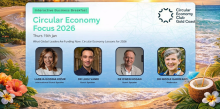
This interactive workshop will explore where investment, leadership and effort can deliver the greatest circular economy impact in 2026.
With four panellists including Ladeja Godina Košir, chair of the ECESP, it will look at the circular economy in real-world conditions, circular education programmes and how EU-Australia cooperation can drive on the circular economy.
This webinar will look at how the EU Ecodesign for Sustainable Products Regulation (ESPR) is affecting Indian textile and fashion suppliers exporting to the EU. It will explain what is involved and what exporters need to do to comply with the rules.
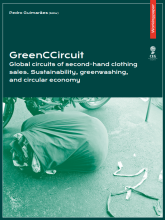
The distribution and consumption of second-hand clothing have evolved into a rapidly expanding market that spans multiple countries, some where these garments are worn, discarded and accumulated, and others where they are imported, distributed and consumed. The result is a complex network of North–South global circuits.
This report is the outcome of the GreenCCircuit project which aims to contribute to development education in the context of the circular economy in the textile and clothing sector in the Ibero-American space, particularly Mozambique and Mexico.
The report uses Portugal as an example of exporting countries, while Mozambique and Mexico are illustrative of recipient countries. It concludes that the social and economic aspects are both vital.
This webinar will explore the international used clothing trade.
It will present the report on From Collection of Used Clothes in Sweden to Reuse in Kenya: A Case Study of Humana LT’s Value Chain for Second-Hand Clothes and look at the economic and environmental value of second-hand clothing exports and how policy can best support circular textile flows.
The EU CERC's annual Circular Business Awards is aimed at micro, small and medium-sized enterprises in countries eligible for official development assistance support. This year two circular business prizes will be awarded: one for a circular business in electronics & ICT sector and one for a young female entrepreneur. Apply now!
The EU CERC's annual Policy Implementation Award is geared to national, supra- and sub-national or regional public sector organisations in countries eligible for official development assistance support. It rewards organisations which have a central role in driving the implementation of a circular economy policy initiative at national level. Apply now!
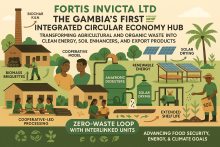
Fortis Invicta Ltd is launching The Gambia’s first integrated circular economy hub. This replicable model is aligned with the principles of the EU Green Deal and the African Circular Economy Alliance (ACEA) and is designed to transform agricultural and organic waste into clean energy, soil enhancers and high-value export products.
This roadmap is designed to enable national governments to shift from a linear to a circular economic model.
It sets out a step-by-step process for countries, starting with planning and engaging stakeholders, then forming a dedicated team, identifying key stakeholders and thoroughly analyzing the country's current economic framework to find opportunities for circularity.
Drawing insights from global case studies, it offers practical solutions tailored to each developing country's unique context. It highlights the importance of collaborative efforts involving businesses, international organisations, academic institutions, financial entities and NGOs.
It aims to empower nations in the Global South to embrace sustainable development, environmental preservation, and economic resilience.