The circular transition must be accompanied by a systemic change in the architecture of the tax system to head towards circular taxation, as the inherited tax system of today reinforces the linear economic model. A thorough examination of all aspects of tax design and its effects is needed during the process of switching to circular taxation.
In 2021, the Leadership Group on Retailers, Consumers and Skills considered issues such as how to made the electronics sector more circular, how to boost public awareness of the need to become more circular and how to step up training with a view to reskilling and upskilling.
In 2021, the ECESP Textiles Leadership Group identified three key topics: the EU Policy Framework, Extended Producer Responsibility (EPR) and Circular Design for textiles. This document summarises the main takeaways from the three #EUCircularTalks online events and a year of work.
The Circular Economy Stakeholder Conference is the main gathering of the European Circular Economy community. Now in its 5th edition, the European Commission and the European Economic and Social Committee joined forces with the French EU Council Presidency to organise this flagship stakeholder conference on 1 and 2 March 2022.
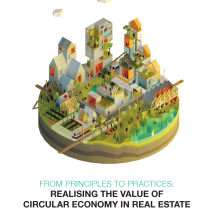
Arup has joined forces with the Ellen MacArthur Foundation to produce a report on the value of circular economyin real estate.
The circular economy offers real estate investors a framework for achieving environmental and social goals while delivering better economic performance. How do real estate business models need to change - apart from eco-design - if circular principles are to scale up in this sector?
The report defines five models to improve financial performance to the benefit of real estate investors and construction clients:
The ECESP Coordination Group members will present Europe's pioneering work in the field of the circular economy to a global audience on 17-18 January 2022 during the Europe Circular Days in Dubai. European Commissioners, MEPs, and other EU institutions' representatives will join the event to present Europe's vision for the circular economy.
A historic decision has been announced at the Catalonia Circular Hotspot Event 2021! The 2023 edition of the Circular Economy Hotspot will be hosted by Nigeria, Ireland, and Chile!
As part of the European LIFE Waste2Build project, INEC and SYNETHIC launched a survey to identify existing circular economy approaches in the construction and deconstruction sector. One of the questionnaire's objectives is to showcase the initiatives already on the ground.
The French National Institute for Circular Economy (INEC) has published this paper which aims to use schools - a place familiar to all - as showcases for the circular economy. It contains a series of good practices (for public and private actors, youth) comprising over 40 territorial initiatives and 50 operational solutions, on the following themes:
school buildings (construction, renovation)
energy supply
inner/outer spatial planning
stationery-equipment-furniture
school cleaning (products and apparel, staff training)
food loop (local and sustainable food, waste, water fountains)
Answer Ecopreneur's survey to take an active part in developing a life cycle sustainability assessment (LCSA) methodology as part of the EU Orienting project - it will only take 5 minutes of your time.