The European Parliament has approved rules covering the whole vehicle lifecycle, including binding recycled-plastic content targets, dismantling design requirements and producer-funded treatment of end-of-life vehicles across the EU.
This CORDIS Results Pack shows how the EU is funding research and innovation to create a sustainable, climate-neutral and circular textile sector.
It showcases nine Horizon research projects focused on optimising resource use and minimising waste across the entire textile production and consumption cycle.
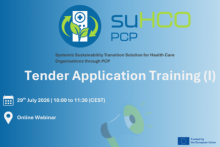
suHCO aims to develop an AI-powered horizontal digital planning and execution-driven system enabling the healthcare sector to become more sustainable and circular.
Through three competitive phases, suHCO will co-develop, prototype and pilot this platform with selected suppliers. This webinar will provide potential applicants with an overview of the suHCO Pre-Commercial Procurement procedure.
The LIAISE COST Action is a European initiative dedicated to promoting industrial symbiosis.
It has deployed an online platform designed to accelerate the global transition toward sustainable industrial ecosystems. Information is retrieved automatically from international patents, policy portals and high-impact publications, then verified by experts.
FUELGAE is an EU-funded project working on converting CO₂ emissions into sustainable advanced biofuels for air and sea transport and heavy vehicles that are difficult to electrify. Microalgae absorb the emissions and are then turned into biofuels.
Climate change, inconsistent policies, greenwashing concerns and the promise of AI-powered sorting systems are reshaping how the wood sector must adapt.
The Wood2Wood project is addressing a structural blind spot in circular economy transitions: the future occupations needed to make wood reuse viable at scale.
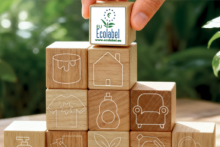
Europe's circular economy transition is changing what is expected from goods, services and businesses: products need to be more resource-efficient and consumers need reliable information.
The European Commission is looking for input on the role and functioning of the Treaty-based Horizon Europe European Partnerships and Joint Undertakings.
Do you have experience of these initiatives and views on how they are organised? Then fill out the questionnaire by 16 October!
Construction and demolition waste (C&DW) makes up just over one third of total waste generation in the EU. Despite relatively high recovery rates of used materials, Europe’s construction sector will need to be even more ambitious in its waste management practices if it is to fully embrace Europe’s circular economy.
According to this European Environment Agency (EEA) briefing, circular approaches are key to increasing the quality and quantity of recycling and reuse of construction and demolition materials. The document examines how circular economy-inspired actions can help achieve waste policy objectives, namely waste prevention and increase both the quantity and the quality of recycling for C&DW while reducing hazardous materials in the waste.
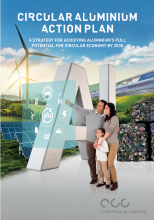
The Circular Aluminium Action Plan is the aluminium sector’s strategy for achieving aluminium’s full potential for a circular economy by 2030. The action plan aims to ensure that all end-of-life aluminium products are collected and recycled efficiently in Europe to maximise the aluminium recycling rates and to keep the material in active use. It builds on the aluminium industry’s Vision 2050 and provides policy recommendations for the sector.
The aluminium industry has the potential to be a key driver in achieving Europe’s ambitions for a climate-neutral and circular economy. Aluminium is by nature circular and fit for multiple recycling: it can be recycled over and over again without losing its original properties (lightness, conductivity, formability, durability, impermeability).