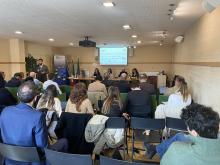
The BATMASS project (EU circular BATtery valley for second life, recycling, and re-manufacturing of materials and black MASS) aims to revolutionise the battery value chain in Europe by creating a cross-regional ecosystem based on circular innovations.
On 17 March, it hosted a Forum exploring opportunities to scale up circular battery technologies and strengthen Europe’s battery value chain.
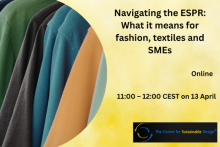
This webinar will explore the latest developments in the Ecodesign for Sustainable Products Regulation and what it means for the fashion, clothing and textile industry, especially SMEs.
This is the first in a series of webinars in which SYMBIOREM project partners will present the solutions and strategies developed to remediate and restore contaminated soil and water, as well as to enhance bioremediation efficiency, use secondary inputs and valorise residues and contaminants.
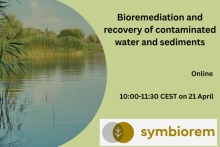
It will present a range of methods and approaches for dealing with contaminated water and sediments-related test cases in Europe, such as floating islands, floating wetlands and a cascade bioreactor system.
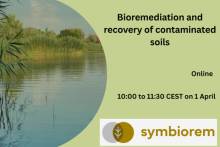
This is the first in a series of webinars in which SYMBIOREM project partners will present the solutions and strategies developed to remediate and restore contaminated soil and water, as well as to enhance bioremediation efficiency, use secondary inputs and valorise residues and contaminants.
It will outline how the partners tackled the pollution of different soil environments and provide insights into the route to upscale different bioremediation solutions.
Businesses are key drivers of regional transformation. Support from public authorities and cooperation with research institutions, local administrations and networks is key to overcoming barriers and unlocking the potential of the circular economy.
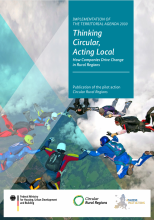
This publication shows how companies in rural regions can drive the transition towards a circular economy. Drawing on examples from German and European model regions, it highlights how local enterprises implement circular business models, what opportunities arise for regional value creation and resilience, and which policy and governance frameworks can foster this transformation.
The findings show that the circular economy is not only an ecological necessity but also a strategic pathway towards sustainable and resilient regional development.
The European Commission is seeking feedback on possible revisions to the criteria of the EU Taxonomy, the classification system for sustainable economic activities. The goal of the revision is to make the framework simpler and easier to use.
The TREASoURcE project's final conference will showcase territorial and regional demonstrations of systemic circular economy solutions in plastics, batteries, and biobased waste and side streams.
Find out about practical solutions, tools and strategies tailored for policy makers, industry, cities, researchers and civil society – and take home actionable approaches for your region, sector or organisation.
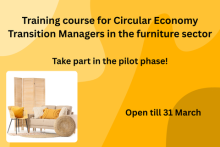
This course is designed to help the furniture value chain become more circular and sustainable. The pilot phase will run until 31 March and aims to have the course tested by 400 people. Feedback would be greatly appreciated!
DPPSkop is a comprehensive B2B SaaS platform developed to meet the Digital Product Passport (DPP) requirements mandated under the EU’s Ecodesign for Sustainable Products Regulation.
The platform enables manufacturers, particularly in high-impact sectors such as textiles, batteries and electronics, to digitise, manage and share the lifecycle data of their products.