Want to know how AI can help assess the environmental and climate impact of bio-based products?
At this second workshop in a series of two, the ARGONAUT project will be presenting its updated JASON tool. Focusing on bio-based industrial applications from Italy, find out about the Digital Bio-product Passport framework and how AI-driven assessment can evaluate products made from agricultural and agri-food by-products.
The learning hub is the outcome of the FABRIX project which explored the connections between urban space and business ecosystems, and encouraged local, circular urban production in the textile and clothing industry.
The hub provides a wide range of practical guidelines and toolkits to help make businesses in this industry become more circular.
The German platform Transpareo provides DPPs which store ten years' worth of versions. Each DPP also has four access levels, from public to authorities only, meaning that confidential data is kept safe.
Lifetwin is a software-as-a-service platform which helps businesses meet DPP requirements. Its DPPs also enable after-sales service, as consumers can access digital warranties, submit maintenance and repair requests, order original spare parts, or review user manuals.
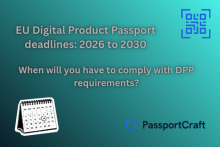
PassportCraft helps brands create, host and manage digital product passports for products sold in Europe. They have developed a useful reference timeline bringing together the key Digital Product Passport (DPP) and related EU sustainability deadlines from 2026 to 2030.
Digital Product Passports are intended to provide the information needed to repair a product, reuse its components and enable efficient disposal at end of life.
However, a DPP only does circular work if the person holding the product can read it. WIARA makes multilingual publication the default rather than a paid extra.
DPP Envoy is a B2B software platform that helps manufacturers and importers build EU-compliant Digital Product Passports for batteries, textiles and construction products.
Their website also includes a wide range of practical guides which will be very useful for SMEs familiarising themselves with this area.
The European Commission's Joint Research Centre has developed a set of methodological reports to support the implementation of the ESPR. Workshops will be held to gather feedback on each of them.
Interested? Then register for this project! It'll run from September 2026 to December 2027.
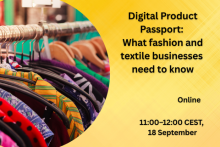
This webinar will explore the latest developments in the Digital Product Passport and what they mean for the fashion and textile sector, with a particular focus on SMEs.
AKT-Origins is a Rotterdam-based company developing a Digital Product Passport platform.
ORIGINS is geared to the needs of SMEs and enables companies to provide the information required on what the product is made of, where it came from, how to keep it in use, and what should happen to it at end of life without publishing sensitive information.