BIOBUILD, a Horizon Europe-funded innovation project, has been launched with a €4.9 million budget to provide thermal solutions for energy efficient buildings using fully bio-based building materials.
The project incorporates bio-based phase change materials (bioPCMs) into solid wood and fibres bound by plant oil resins, lignin and fungal mycelium. BIOBUILD aims to reduce the energy consumption of buildings by up to 20%.
SUSTAINair is a project funded by the EU Horizon 2020 programme. It aims to revolutionise aviation through groundbreaking technologies and impactful solutions.
Circular Aviation in the EU, SUSTAINair’s final conference, will bring together researchers, industry leaders and stakeholders to discuss the future of aviation sustainability. This flagship event will take place in Vienna on 11-12 June.
Climate Action Week for Fashion & Apparel will take place on 18 to 22 March, organised by the Scandinavian Textile Initiative for Climate Action (STICA).
This Accelerator Session of the World Circular Economy Forum will be held in Brussels on 17 April 2024, co-organized by UNECE and the Mission of the Republic of Serbia to the European Union.
The session will look into how partnerships and regional stakeholder platforms drive the circular economy transition, particularly in regions where circular practices are emerging.
A modern society needs access to all the critical raw materials (CRM) necessary to maintain and develop its industries, infrastructure and welfare. CRM are especially important for ongoing technology shifts like the European Green Deal and digitalisation processes.
Five milestones must be reached to establish Nordic secondary value chains for CRM:
A system that makes it possible to identify waste streams with CRM-recycling potential.
A system for cost-effective and efficient collection of waste streams with CRM-recycling potential.
A system for separating materials enriched with CRM from other materials in the waste stream.
A recycling technology that allows for recovery of all relevant CRM at acceptable rates.
Go Circular 2024 will focus on utilising enablers and breaking barriers to achieve plastic circularity.
It's an opportunity to discuss the main challenges in the field of plastic circularity and to identify partners for related projects. The conference covers the entire circular plastic value chain and aims to speed up the shift to a low carbon circular economy.
Biorefine Cluster Europe (BCE) links up projects and people in the area of bio-based resource recovery, with a view to contributing to more sustainable and circular resource management.
It focuses on the biorefinery sector, i.e. chemicals, materials, energy and products from bio-based waste streams:
Bio-based (waste) streams as an input for the circular economy
Bioprocesses
Sustainable bio-energy production in its various shapes, and
Resource recovery: extracting minerals, chemicals, water and materials from biomass.
Its main objectives:
Strengthening interaction between projects
Fostering dissemination and stakeholder outreach
Enhancing research
Identifying gaps in knowledge.
BCE aims to build its community and promote knowledge exchange.
EuRIC, a leading voice in Europe's recycling industries, is organising an event on "Plug into sustainability: e-waste recycling", to take place on 3 June from 14:00 to 17:30 CEST, in Brussels.
It will be an opportunity to explore the latest developments and sustainable practices in e-waste recycling, bringing together industry leaders, policy makers and innovators.
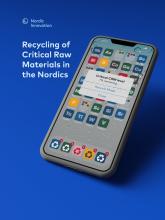
On 29 February at 13:00 – 14:30 CET, the Nordic Working Group for Circular Economy will hold a webinar to present the report on 'Recycling of Critical Raw Materials in the Nordics'.
The report provides a comprehensive overview of the Nordic region's secondary value chains for CRMs.
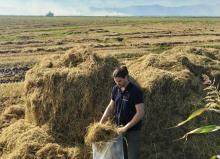
The FUSTARISE Project aims to find more sustainable ways to deal with lignocellulosic waste - plant waste from agriculture and forestry. Most of this waste currently ends up in landfills - this project uses solvent-free mechanochemical techniques to transform it into products such as capsules and adhesives.