BE O Lifestyle is a Dutch company which has developed two forms of plant-based plastic. They manufacture water bottles and coffee cups from sugar cane residue and used vegetable oil. These products are reusable, repairable and recyclable - and nice to look at!
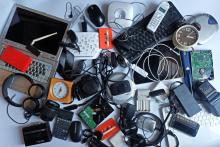
The E-waste Race is an educational competition between ten primary schools to collect old electronic devices. Project participants are given an introductory lecture about recycling and the valuable materials contained in electronic devices. They then start collecting e-waste and the school which collects the most wins an educational - and fun! - school trip.
Ocean Sole takes the world's most widely worn shoe, the flip flop, and turns it into art, and the Dutch company Nic&Mic sells it in the Benelux countries. Ocean Sole is Kenya-based and began with the desire to clean up beaches that were heavily polluted with plastic and flip flops. Ocean Sole has grown to employ 90 Kenyans.
Arapaha is a design company which develops and manufactures sustainable, circular household and sports items and clothing. It focuses on circular processes and uses biobased composites. Goods purchased in their webshop can be returned when no longer needed so that the components can be reused.
The European Commission is organising a series of targeted stakeholder workshops to gather input on challenges and gaps as well as opportunities for the textile sector in the transition towards sustainability. The fourth workshop on 18 June 2021 from 9 a.m. to 1 p.m. CET will focus on “product design for sustainability in the textile value chain”.
Leef has eliminated plastic waste by producing 100% biodegradable plates from (non-palm oil) palm leaves grown in mixed plantations in Tamil Nadu, India.
Signify was the first lighting company to develop 3D printing of luminaires at scale. As part of its commitment to doubling its positive impact on the environment and society, Signify has committed to doubling its circular revenues to 32% by the end of 2025.
Grown bio is a biotechnology company that has developed an innovative use for mycelium, the network of mushroom roots. It uses the mycelium as a binding agent for agricultural waste to create fully biodegradable and toxic-free packaging or insulation material.
The online panel discussion organised by European Policy Centre (EPC), in partnership with Apple, on 1 June 2021 will bring together policy-makers, and representatives of industry and civil society to discuss the role of innovation and partnerships in achieving zero pollution, climate neutrality and a circular economy.