Industry faces major challenges with regard to handling the transition to an economy with net-zero greenhouse gas emissions by 2050. Whilst there is a growing body of literature seeking to understand how this transition will unfold, there is currently limited understanding of what the wider environmental impacts could be from the transformation.
Industry faces major challenges with regard to handling the transition to an economy with net-zero greenhouse gas emissions by 2050. As yet, we are far from fully understanding the potential wider environmental impacts of this transformation. Furthermore, we are largely unaware of the untapped potential of industrial facilities in sectors covered by the Industrial Emissions Directive (IED) to contribute to the circular economy.
The study aimed to provide an initial overview of the potential wider environmental impacts of industry's transition within the scope of the IED to a low carbon economy, and to gain a better understanding of how IED facilities could contribute to a circular economy.
The Amorim Group is among the cork industry’s world leaders. It has a business unit focused on recycling, reusing, and reinventing the use of cork - alone or mixed with other raw materials - in the generation of new products and applications (construction, footwear, aerospace, railways, etc.).
I:CO is an international circular solutions provider for the collection, certified sorting, reuse and recycling of clothing and shoes. They aim to support innovative new recycling technologies which help close the loop of production cycles.
The Woody Group, a company which manufactures pyjamas, wants to use raw materials more efficiently and responsibly in the future. It also wants to take more responsibility for its products once they are put on the market.
Convert works to support UN Sustainable Development Goal 12: ensuring sustainable consumption and production patterns. It explores how natural sustainable resources can be used to make new products and seeks to reduce the amount of waste on earth through recycling and upcycling. Every fibre matters when waste fibres are used as non-woven material.
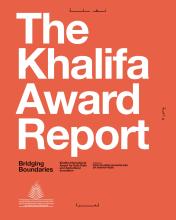
Date palms are becoming ever more important globally and in the MENA region (Middle East and North Africa). The Khalifa Award Report, inspired by 46 contributors in 21 countries, focuses on the 5 Ps -People, Planet, Prosperity, Peace and Partnerships - which shape the United Nations 2030 Agenda for Sustainable Development.
The bio-circular economic potential of the date palm industry has yet to be explored. In some cases, it is a necessity that can save lives in oases prone to fire hazards caused by climate change; it can also provide new green jobs in the sustainable economy transition. The European circular economy transition can serve as a model for adaptation in the MENA region.
More info on date palm recycling on pages 162-3 of the report.
Circular Change focuses on establishing and fostering dialogue between stakeholders, particularly as regards creating circular economy roadmaps. It promotes new narratives, exchanges knowledge and enables innovation.