This guidance document provides cities with practical tools to drive the circular economy transition at local level and directly harvest its benefits.
It looks at circular consumption principles and approaches, redefining urban space to facilitate circular consumption, challenges in the transition to circular consumption, and the role of cities in promoting circular consumption.
This document is intended to guide cities on how to advance their circular transition in the built environment, from establishing an enabling framework to implementing circular solutions.
It covers a circular urban built environment, the changing roles of stakeholders in a circular built environment and key recommendations and action points for cities.
Cities have a critical role to play in the transition from a linear to a circular economy. They are centres of consumption and production, and they host the systems and policies that enable and govern urban life.
This guidance document aims to help cities identify actions and solutions that can accelerate their circular transition. The document covers eight key sectors with high circular potential: Built environment, Consumer goods, Food, Manufacturing, Mobility and logistics, Tourism and leisure, Waste and material management and Water and wastewater management.
The circular approaches that can be adopted in each sector are introduced first, and this is followed by examples of potential circular actions and solutions.
The circular economy can help us address many of the crucial challenges and problems that we and our planet face today, such as wastage in different forms, resource depletion and climate change. Cities have a very important role in the circular transition as cradles or ecosystems and catalysts for circular change.
This guidance document outlines why cities should actively engage in and support others in the circular transition and how they can do that through 15 circular steps. The steps are divided into three phases: prepare and plan, facilitate and act, and invest and implement.
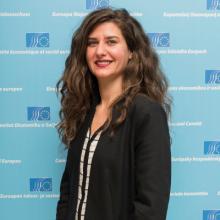
Maria Nikolopoulou, member of the European Economic and Social Committee and the ECESP Steering Group, has written an article featured in the Open Access Government magazine.
She argues that the European Circular Economy Stakeholder Platform is Europe’s best bet for a sustainable future. Find out more!
CircuLaw is an open-source knowledge platform that helps policymakers, project leaders and purchasers effectively utilise existing laws and regulations to accelerate the transition to a circular economy.
EUIndTech2025 will bring together stakeholders from research organisations, industry, industry associations, NGOs and policy makers to discuss state-of-the-art technologies, technological challenges and future trends in the field of industrial technologies.
It will focus on presenting solutions and best practices while developing written recommendations for new EU policies in four key areas: technology, materials, science and business, community in action.
The European Training Foundation has launched the fifth Green Skills Award, an annual competition designed to provide ideas and inspiration for policy makers and practitioners on how things can be done when it comes to green skills deployment and promoting sustainability.
Are you passionate about sustainability, innovation and tackling the challenges of plastic waste? The Symposium on Innovation in the Circularity of Plastic Materials is your opportunity to contribute to shaping the future of plastic materials.
Shifting mindsets is just as crucial as setting criteria when it comes to circular procurement. How can we move beyond compliance-driven approaches and embed circular thinking into procurement strategies? This #EUCircularTalks event hosted by the ECESP Leadership Group on Circular Procurement and EU Competitiveness explored these topics.