On 10 April 2025, the European Circular Economy Stakeholder Platform (ECESP) held a high-level stakeholder dialogue in Brussels. The purpose was twofold: it provided a forum for stakeholders to exchange views and offer feedback on ongoing legislative proposals, and it gathered valuable insights that will contribute to EU Green Week in June.
This report summarises the discussions which took place.
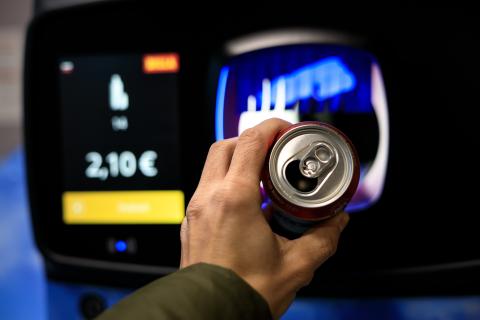
The European Deposit Return Systems Association (EDRSA) for beverage packaging was founded in 2025.
The objective is to advance best practices, policy development and collaboration in the field of deposit return systems (DRS) in Europe.
EDRSA aims to foster innovation, efficiency and environmental responsibility in DRS programmes by bringing together key players from across the industry, including system operators, policymakers, recyclers and technology providers. The association will serve as a platform for sharing expertise, advocating for effective legislation and driving improvements in circular economy initiatives.
The members of the Association operate in 15 EU Member States plus Iceland and Norway.
PSLifestyle is a free app that empowers individuals to better understand their environmental impact and supports them in adopting more sustainable and circular lifestyles. By providing personalized insights into users’ carbon footprints, it encourages changes in everyday consumption patterns that align with the principles of the circular economy.
REuse Economy Expo is a European trade fair that connects up players and solutions to co-construct and develop economic models for reuse.
With over 300 solutions, 70 conferences, masterclasses and workshops, and more than 3 000 expected visitors, this two-day event is designed to help organisations take steps towards integrating reuse in their operations.
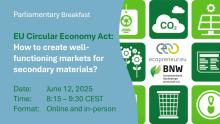
The European Sustainable Business Federation and the German Sustainable Business Association are organising a parliamentary breakfast hosted by Gerben-Jan Gerbrandy MEP to facilitate the dialogue between business and policymakers on how to develop the European market for recycled material.
Come and find out about successful art-science interactions, discuss ways to promote research findings through art and culture, and engage with research and innovation stakeholders to foster the circular economy!
Are you working on circular economy challenges in your city or region? Progress is faster when you share experiences with peers working on the same issues. Join one of the new CCRI communities of practice to benefit from focused, in-depth exchanges on a specific topic. Apply now for one of the four communities of practice.
In 2016, the European Economic and Social Committee (EESC) came up with the idea of a stakeholder platform for the circular economy. It's still living up to circular principles with a Reuse corner for parents.
The Festival of Circular Economy is an opportunity to make connections, translate theory into positive, practical action, celebrate successes, learn from mistakes and help others avoid them, and make a difference by thinking and doing things differently.
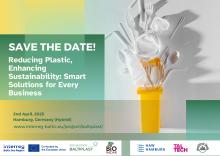
Are you struggling with plastic waste reduction, rising sustainability demands or compliance with sustainability regulations? BALTIPLAST invites you to an event where you’ll learn about practical approaches to reduce plastic waste, improve sustainability and stay ahead of regulations with cost-effective solutions - without disrupting your operations.