This document provides an easy step-by-step guide for developing a Circular City Strategy. It looks at relevant good practices in Europe and considers common barriers and key factors for success in this process.
The circular economy can help us address many of the crucial challenges and problems that we and our planet face today, such as wastage in different forms, resource depletion and climate change. Cities have a very important role in the circular transition as cradles or ecosystems and catalysts for circular change.
This guidance document outlines why cities should actively engage in and support others in the circular transition and how they can do that through 15 circular steps. The steps are divided into three phases: prepare and plan, facilitate and act, and invest and implement.
CARE is an innovative Horizon Europe project that aims to promote sustainable living and combat climate change. It's now inviting households in Finland, Norway, Sweden, Estonia and Germany to join its Circular Food and Clothing pilot projects.
Starting in summer 2025, over 100 households will embark on an 18-month journey to reduce food waste and extend the life of their clothes, supported by individual data, expert advice and a strong community. Register now!
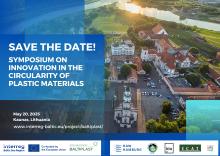
Are you passionate about sustainability, innovation and tackling the challenges of plastic waste? The Symposium on Innovation in the Circularity of Plastic Materials is your opportunity to contribute to shaping the future of plastic materials.
Shifting mindsets is just as crucial as setting criteria when it comes to circular procurement. How can we move beyond compliance-driven approaches and embed circular thinking into procurement strategies? This #EUCircularTalks event hosted by the ECESP Leadership Group on Circular Procurement and EU Competitiveness explored these topics.
In a circular economy, solutions are often spread across the entire value chain: moving ahead with them requires a combination of collaboration, sustainable (product) design, circular business models and processes and the ability to convince others that this whole complex process is necessary. This demands knowledge of the circular economy and the skills to turn that knowledge into action to initiate change within organisations.
The Circular Ambassador Programme was set up to shape ambitious professionals into Circular Ambassadors. This session will focus on training future trainers.
This report is the outcome of a collaborative endeavour by IFC, the Romanian Government, PIVOT-C and FEPRA GROUP.
A year of in-depth consultations and workshops (2023-2024) involving Romanian experts from the public and private sectors resulted in a guide setting out operational actions and recommendations for Romania's circular economy transition. The recommendations are intended for the Romanian government and central authorities and aim to facilitate the implementation of the National Circular Economy Strategy and the Circular Economy Action Plan launched in 2023.
The proposals cover regulatory frameworks, financial incentives, educational initiatives and infrastructure development.
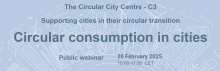
The Circular City Centre - C3 is a competence and resource centre within the European Investment Bank, which supports EU cities in their circular economy transition. It is organising a webinar to present its new guidance document on Circular consumption in cities, highlighting how cities can facilitate access to, promote and incentivise more circular consumption options.
Recycling Albania was set up in 2022, based on the zero waste hierarchy. It aims to transform Albania’s waste sector into a model for sustainable resource management and lead the way in circular economy solutions in the Western Balkans.
It's setting up a Circular Economy Park, with a Multifunctional Education Centre, Recycling Yard and Second-Hand Store. The environmental, economic and social dimensions of the circular economy are covered!
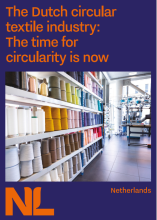
This publication featuring Holland Circular Hotspot shows the state of play and potential of circularity within the textile value chain in the Netherlands and beyond.
It aims to engage international dialogue on accelerating the transition to a fully circular textile economy, with policymakers, researchers, entrepreneurs, consumers and investors.
The challenges of achieving sustainability and circularity in textiles are complex and interconnected, from reducing environmental impact to improving labour conditions. This underscores the importance of international and multi-stakeholder collaboration to drive innovation, scale up sustainable practices and create a thriving circular textile industry.