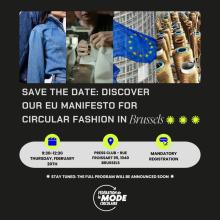
The Fédération de la Mode Circulaire (Circular Fashion Federation) is organising an event which will mark a milestone in their journey towards sustainable fashion: the release of their EU Manifesto for Circular Fashion. This manifesto outlines a policy roadmap for the European Union to leverage circular fashion as a means to bolster its textile industry, promote fair competition and champion environmental and human rights standards.
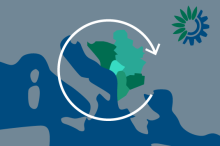
The Western Balkans need to boost their capacity to implement circular economy concepts and practices that go beyond waste management. The CSCP, VITO and the European Environment Agency accordingly launched the Capacity Building on Circular Economy in the Western Balkans project.
RedGirraffe ESG Horizon is a software as a service solution designed for enterprise resource planning. It supports the circular economy by enabling precise tracking and optimisation of Scope 3 emissions across global supply chains.
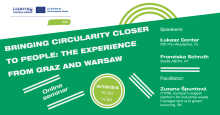
This online seminar explores how to empower residents of European cities to adopt more circular living practices. It will delve into initiatives successfully implemented in Austria and Poland.
Are you driving innovation in sustainable energy and contributing to a circular economy for Europe? Does your organisation have a pioneering project that demonstrates the potential of the circular economy for reducing energy consumption, promoting renewable energy or minimising waste?
Then submit your project to the EU Sustainable Energy Week (EUSEW) Awards 2025!
Revivack has set up the world's first system based on blockchain technology that facilitates the individual return of unwanted items to the manufacturer. These items can therefore be recovered in an orderly, transparent and reliable way, contributing to the promotion of the circular economy.
The built environment accounts for at least 40% of anthropogenic greenhouse gas emissions. For the Alps, it is key to use local resources effectively while upholding EU rules and promoting the adoption of common standards across the building value chain.
The European Interreg Alpine Space project BAUHALPS is endeavouring to meet these challenges by developing and testing a model that combines New European Bauhaus concepts with sustainability measurements and indicators in an innovative way.
incommon is a non-profit organisation that encourages people to adopt the circular economy as a way of life. They use a bottom-up approach, working with individuals, schools, businesses, institutions, groups and local authorities.
Their approach ensures that people are informed about circular economy principles and engaged in implementing them, enabling them to make sustainable choices and drive local change.
RE-PLAN CITY LIFE (RElevant Audience Plan Leading to Awareness Network for CIrcular Economy Use of Recycled TYre materials in CITY LIFE) is a LIFE project raising awareness about the use of recycled tyre materials.
They are organising a live workshop with an on-site visit on the use of recycled materials in public works. The workshop will describe the tools put in place by the project to stimulate stronger engagement from public authorities to adopt best practices and green procurement.
And the label is doing really well: the European Commission has released the latest statistics showing continued growth in the number of products (goods and services) awarded the EU Ecolabel. See how it contributes to the circular economy!