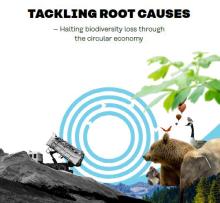
Circular economy interventions in four key sectors can halt global biodiversity loss and help the world's biodiversity recover, finds this study.
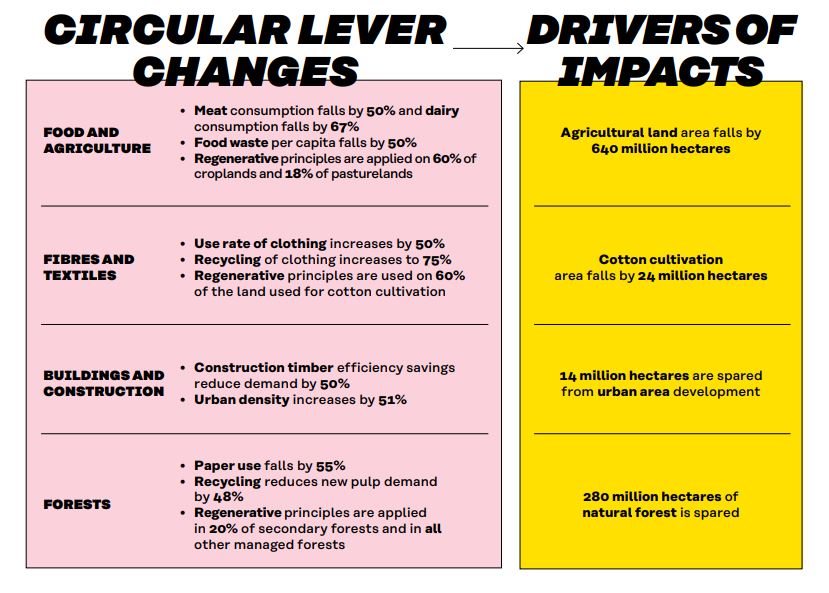
Tackling root causes - Halting biodiversity loss through the circular economy, written by experts from Sitra and Vivid Economics, is the first to quantify the role a circular economy can play in tackling global biodiversity loss, targeting the four sectors with the largest impacts:
food and agriculture
construction
textiles
forest and forestry
Circular interventions in these sectors can halt biodiversity loss even if no other action is taken. And more than that, the study finds that the world’s biodiversity can recover to 2000 levels by 2035, if the circular interventions are implemented.
The EU-funded OLEAF4VALUE project set up a consortium of highly experienced partners to develop a valorisation system for the olive leaves biomass. The consortium addressed all levels of the value chain: raw material, biorefining, post-extraction technologies, market validation and sustainability assessment.
The HOOP Network of Cities and Regions seeks to facilitate the exchange of knowledge and mutual learning among cities and regions willing to recover valuable resources from urban bio-waste and wastewater to make bio-based products.
By joining the network, cities and regions gain information about innovative urban bioeconomy solutions and engage in activities relevant to their context and specific interests. Participants have direct exchanges with the eight HOOP lighthouse cities and regions, sharing experiences and expertise.
The HOOP network is only open to organisations that plan, organise or operate municipal waste management or wastewater treatment activities, for instance local or regional authorities and waste management companies.
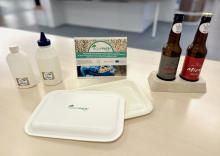
The BioSupPack project aimed to deliver novel, cost-competitive and versatile bio-based packaging solutions - based on PHA - that demonstrate high-performance for the packaging of food, cosmetics, homecare and beverage products as well as no environmental damage during and after use.
Urban agriculture comes with its own share of environmental impacts. Circular strategies promise to reduce these impacts, but not all strategies are resource efficient and environmentally effective.
This paper finds that the most eco-friendly and circular strategies for urban agriculture, taking a Mediterranean tomato crop as a case study, include:
Struvite (phosphate mineral recovered from wastewater treatment) instead of non-renewable phosphate fertiliser to conserve freshwater
Recycled steel and materials for urban agricultural infrastructure to reduce carbon emissions, toxicity and freshwater pollution
Closed-loop irrigation to minimise ocean and freshwater pollution. However, if new infrastructure is required, it could lead to an increase in carbon emissions.
SmartProSys (Smart Process Systems for a Green Carbon-based Chemical Production in a Sustainable Society) is a research initiative for sustainable chemistry and circular economy at the Otto von Guericke University in Magdeburg, Germany. It is funded by the Ministry for Science, Energy, Climate Protection and the Environment of the State of Saxony-Anhalt.
SmartProSys aims to replace fossil raw materials in chemical production with renewable carbon sources, thus contributing to a carbon-neutral society. The initiative involves researchers from the fields of systems-oriented process engineering, chemistry, mathematics, logistics, political science and psychology.
The initiative also organises events and issues a newsletter.
Horizon Europe Framework Programme has published a call on circular economy and bioeconomy sectors. The deadline for submissions is 15 February 2022.
The successful proposal will support the European Green Deal with a topic that will support the transition towards a sustainable, regenerative, inclusive and just circular economy across regions of Europe at local and regional scale.
The Leadership Group on Food waste, food systems and the bioeconomy has been working since November 2020 to highlight and raise awareness of the importance and complexity of food systems and the bioeconomy as a driver of the transition towards a circular economy in Europe.