Small Scale Actions (SSA) are a new element introduced for this round of URBACT action planning networks (2019-2022). This compendium summarises all of the SSAs carried out within the Resourceful Cities Network. It aims to support and inspire other cities which want to accelerate their circular transition.
A wide range of SSAs were carried out by Resourceful Cities partners, each one responding to an identified need within the individual city context. Actions included promoting citizen engagement and participation, enhancing knowledge and raising awareness of the circular economy, business support, data collection and monitoring and trialling new business models.
The Osservatorio Innovazione Packaging is run by the Advanced Design Unit in the University of Bologna's Architecture department.Itaims to trigger innovation in the area of packaging. It collects, prepares and provides case studies, knowledge and experience in order to promote circular, collaborative and responsible innovation projects along the packaging chain.
One of the observatory's goals is to create a regional and national "network of networks" within the packaging sector so as to foster connections between stakeholders.
The platform provides planning services, bridging research, students and businesses through talent labs and competitive projects.
There are levels of access depending on the type of membership.
The Circular Week is a series of events and initiatives dedicated to circular economy and sustainable development, taking place across Europe. It aims to promote the idea of circular economy, support sustainable business models and establish cooperation between stakeholders.
The 2022 edition will take place from 3 to 9 October. Submit your event and help close the circle!
In the context of a three-year project on “Innovative Business Practices and Economic Models in the Textile Value Chain” (InTEX), UNEP is seeking an Implementing Partner to support its impact assessment work on sustainable economic pathways for sustainable and circular textiles. The deadline for submitting proposals is 16 May 2022.
This research project lists ecodesign criteria for circular fashion and textiles.
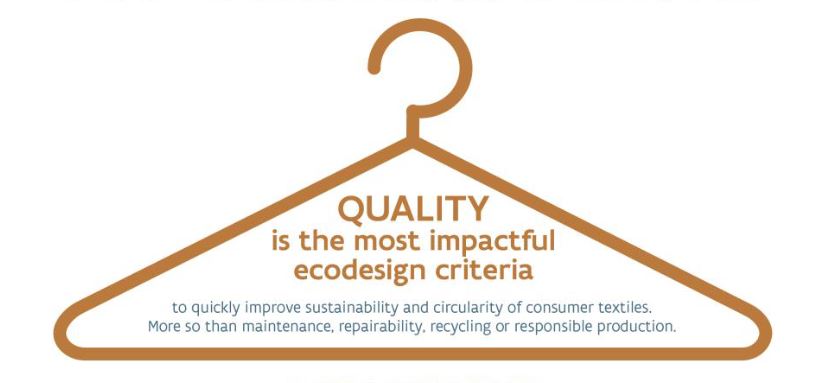
It focused on giving consumer textiles a longer lifespan with optimal reuse potential, making disassembly and recovery possible, and exploring upcycling and high-quality recycling. Extending the life of textile products turned out to have the greatest impact in the short term. Quality seems to be the most impactful ecodesign criterion when it comes to improving the sustainability and circularity of consumer textiles as quickly as possible.
The project defined seven product categories, identifying a set of minimum criteria for each. The report looks at existing labels, standards and regulations and the authors hope it will help expand the Ecodesign Directive by adding a textile category.