The Czech Circular Hotspot will be launched on 12 April with an opening ceremony in the Kampus Hybernská in Prague. The event is organized by the Czech Institute of Circular Economy.
Today the Commission presented a package of European Green Deal proposals to make sustainable products the norm in the EU, boost circular business models and empower consumers for the green transition. The proposed rules are to make almost all physical goods on the EU market more friendly to the environment, circular, and energy efficient throughout their lifecycle.
On 23 March 2022, the EU Ecolabel officially turned 30 years old. With over 80 000 goods and services awarded the label across 24 product groups, the EU Ecolabel is widely recognised across Europe.
The EU-funded Fashion For Change 2022 Accelerator Programme aims to support designers, innovators and startups from the European textiles and fashion industry in this transition. Applicants are invited to team up and submit their proposals for the Accelerator Open Call by 19 April.
This book provides answers on how to govern the transition to a circular economy in different socio-cultural and political contexts.
It is intended to help the global changemakers who are building our circular future. Author Jacqueline Cramer spoke with 20 representatives of circular hotspots worldwide, thoroughly analysed their different contexts and extracted 10 key takeaways. Everyone working on circular initiatives can use these and adapt them to their own socio-cultural and political contexts.
This initiative is powered by APPLiA - Home Appliance Europe, representing home appliance manufacturers from across Europe.
The Circular Appliances website takes readers through each phase of the home appliance lifecycle, from design to end-of-use. There is a straightforward description of each phase and statistics on this sector.
The Circular Culturewebsite provides a platform for all those who would like to share their practices and recommend innovative solutions for different topics, such as food waste prevention, recycling and resource efficiency. There is a collection of circular projects.
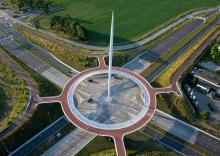
The availability of a quality infrastructure system – networks of roads, railways, bridges and waterways – is a prerequisite for all economic activity to flourish and is also paramount for people’s health, wellbeing and safety. Infrastructure is very important for human society - but its adverse environmental impact on our planet is undeniable.
To mitigate the long-term catastrophic effects of climate change and depleting material resources, a circular economy for infrastructure is crucial. The publication Circular Infrastructure: the road towards a sustainable future aims to bring this aspect into the limelight to inspire action by public actors and practitioners.
Each year, humanity consumes resources equivalent to 1.7 planets. Sustainable resource use is therefore essential if we are to achieve our national environmental and climate objectives and the sustainable global development goals in the 2030 Agenda.
RE:Source is a strategic innovation programme co-funded by the Swedish Agency for Innovation Systems (Vinnova), the Swedish Research Council for Environment, Agricultural Sciences and Spatial Planning (Formas) and the Swedish Energy Agency. The programme focuses on research and innovation in sustainable material use.
Within RE:Source, the RE:Agenda describes the innovation area of sustainable use of resources, which aims to support solutions that contribute to the efficient use of the earth’s resources within the planetary boundaries.
While digital networking is of great advantage for everyday life, the incredible amounts of electrical devices bring with it some particularly ecological risks, especially with regard to the use of resources. This is why the European Commission in the New Circular Economy Action Plan announced a Circular Electronics Initiative. There are still many challenges to be discussed during this workshop.