The Incubation Forum for Circular Economy in European Defence aims to apply the circularity approach of the EU Green Deal to European defence.
It does this by engaging a cooperative community, including EU defence ministries, industry, institutes, research centres, financial institutions, academia and other bodies at national and international level.
Working groups called "Project Circles" cover the following themes:
Critical Raw Materials
Circular Additive Manufacturing
Circular Materials for Textiles
Sustainable Ecodesign
EMAS Uptake Strategy
Green Procurement
Circular Data
Spare Parts Management.
Based on circular economy principles, IF CEED aims to incubate collaborative projects and their respective consortia.
Circular design is an important enabler of the transition towards sustainable production and consumption of textiles through circular business models. The design phase plays a critical role in each of the four pathways to achieving a circular textile sector:
longevity and durability
optimised resource use
collection and reuse
recycling and material use.
This briefing aims to improve our understanding of the environmental and climate impacts of textiles from a European perspective and to identify design principles and measures to increase circularity in textiles. It is underpinned by a report from the EEA's European Topic Centre on Circular Economy and Resource Use available here.
The goal of the circular economy is to take full advantage of all available resources through reducing, reusing, repairing and recycling. The recent Nordic Circular Summit in Copenhagen covered topics from public administration programmes to innovative techniques and renewable practices in the marine and food industries.
What can we learn about the circular economy from the Nordic perspective? Find some answers in this position paper.
This white paper on Quick Scan Circular Business Models - Inspiration for organising value retention in loops from the Dutch Ministry of Economic Affairs and Climate Policy offers an approach for developing a circular business model. It is based on a classification for existing and future circular business models developed in 2021. It consists of seven basic models geared primarily to the manufacturing industry, although it can also be used in other sectors.
The paper is divided into three parts:
an introduction explaining the background and central concepts
an overview of the seven circular business models comprising the classification, and
the actual Quick Scan.
The interactive Quick Scan version can be found here.
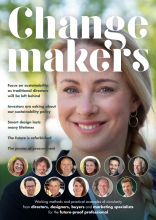
ChangeMakers is a magazine published by Circularities together with Circl/ABN Amro Bank. Readers can learn about working methods and practical examples of circularity from directors, designers, buyers and marketing specialists from companies like Philips, Bugaboo, Fairphone and Mitsubishi.
The magazine aims to inspire future-proof professionals with a wealth of interviews from people who really know what they're talking about and feel passionate about the circular transition. Each section tackles the circular economy from a different perspective: for instance, directors speak about how they need to steer their companies and designers talk about the principles underpinning their work.
If you're interested in circular issues, this magazine is well worth the read!
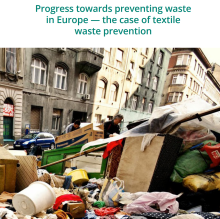
Waste prevention is the best waste management policy option, according to the waste hierarchy - the EU's main rule for the environmental ranking of waste management policies. Its main objective is to reduce waste generation, the environmental impacts of waste management and the hazardousness of the waste generated.
To support this objective, the EU and all its Member States have put in place legislation that promotes activities in products' life cycles aimed at reducing the amount of waste generated.
This report aims to assess progress towards the main objective of waste prevention: decoupling (i. e. breaking the link between waste generation and economic growth).