Within the framework of the Circular Economy Initiative Deutschland (CEID) and its three interdisciplinary and cross-sectoral working groups, more than 130 experts from industry, science and civil society have summed up their findings in the Circular Economy (CE) Roadmap for Germany, which consists of a consolidated opinion addressing society as a whole.
This Roadmap, which has focused - right from the beginning - on shaping a consistent and common target vision for a circular economy in 2030, is a scientifically-based framework for action that systemically describes the necessary steps for Germany to transition to a CE and provides decision-makers from politics, industry and science with concrete recommendations for action.
Ekofungi is a Serbian company that takes a 100% circular approach to mushroom cultivation. It has pioneered a technology for sustainable cultivation of edible mushrooms using recycled cellulose waste. Each year, Ekofungi grows 130 tons of mushrooms which are either sold fresh or dehydrated and mixed with other vegetables.
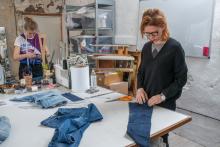
The mission of Reet Aus is to minimise the ecological footprint of one of the world's most contaminating businesses – the fashion industry. They do it by industrial upcycling. This not-wasteful way of production is based on a scientific methodology called UPMADE® that has been developed by the designer and founder PhD Reet Aus in cooperation with Stockholm Environment Institute Tallinn Center.
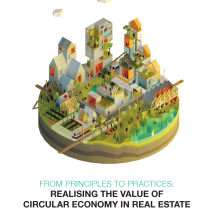
Arup has joined forces with the Ellen MacArthur Foundation to produce a report on the value of circular economyin real estate.
The circular economy offers real estate investors a framework for achieving environmental and social goals while delivering better economic performance. How do real estate business models need to change - apart from eco-design - if circular principles are to scale up in this sector?
The report defines five models to improve financial performance to the benefit of real estate investors and construction clients:
In its publication "Transition time! A circular economy for plastics", the Dutch Sustainable Growth Coalition sheds light on the challenges of plastic, shares innovative cases and makes specific recommendations on how to incentivise action.
The BDI Initiative Circular Economy was created in April 2021 by the Federation of German Industries.
It is a network of more than 50 members that defines the potential of the circular economy and the necessary framework conditions through practical discussions. To this end, they are in close dialogue with policymakers in Berlin and Brussels and with the scientific community.