The Circular Economy Hotspot Catalonia 2021 will take place in Barcelona. The 5th edition of the event aims to share circular economy strategies and experiences.
The celebration of this event strengthens the Circular Catalonia hub, a meeting point for companies, institutions, and people ready to put into practice solutions and strategies to consolidate the circular economy in Catalonia.
Innovative, sustainable, and circular technologies or products don’t always fit the ‘traditional mould’ within a sector which can make it difficult to prove their performance. The EU Environmental Technology Verification Programme (ETV) is set to create credibility for environmental products on their own terms.
The roadmap Policy Framework on biobased, biodegradable and compostable plastics has been published on the European Commission’s portal. You are welcome to give your feedback on it until 27 October!
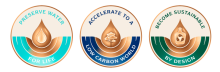
Reduce water use in Diageo's operations with a 40% improvement in water use efficiency in water stressed areas and 30% improvement across the company.
Other (Sustainable management of water)
To be achieved by:
Replenish more water than Diageo uses for their operations for all their sites in water-stressed areas by 2026.
Other (Sustainable management of water)
To be achieved by:
Invest in 150 projects to improve access to clean water, sanitation, and hygiene (WASH) in communities near Diageo sites and local sourcing areas in all of Diageo's water-stressed markets.
Other (Sustainable management of water)
Start Date:
Engage in collective action in all of their Priority Water Basins to improve water accessibility, availability and quality and contribute to a net positive water impact.
Recycling (also including specific waste streams)
To be achieved by:
Achieve zero waste in Diageo's direct operations and zero waste to landfill in Diageo's supply chain.
Recycled materials as part of raw materials demand (recycled content)
To be achieved by:
Ensure 100% of Diageo's packaging is widely recyclable (or reusable/compostable).
Recycled materials as part of raw materials demand (recycled content)
To be achieved by:
Continue to reduce packaging and increase recycled content in Diageo's packaging (delivering a 10% reduction in packaging weight + increasing the % recycled content of the packaging to 60%).
Recycled materials as part of raw materials demand (recycled content)
To be achieved by:
Ensure 100% of Diageo's plastics are designed to be widely recyclable (or reusable/compostable) by 2025 and achieve 40% recycled content in Diageo's plastic bottles by 2025, and 100% by 2030.
Other (Sustainable agriculture management)
To be achieved by:
Provide all of Diageo's local sourcing communities with agricultural skills and resources, building economic and environmental resilience (supporting 150,000 smallholder farmers).
Other (Sustainable agriculture management)
To be achieved by:
Develop regenerative agriculture pilot programmes in 5 key sourcing landscapes.
Other (Accelerate to a low carbon world)
To be achieved by:
Become Net Zero carbon in Diageo's direct operations.
Other (Accelerate to a low carbon world)
To be achieved by:
Reduce Diageo's value chain carbon emissions by 50%.
Other (Accelerate to a low carbon world)
To be achieved by:
Use 100% renewable electricity across all of Diageo's direct operations.
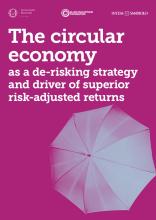
Bocconi University’s analysis of 200+ European, publicly listed companies across 14 industries shows that the higher the circularity of a company, the lower its risk of defaulting on debt, and the higher the risk-adjusted returns on its stock.
The paper reveals how circular economy strategies can reduce investment risk by decoupling economic growth from resource consumption, diversifying business models, and allowing businesses to better anticipate stricter regulation and changing customer preferences. Embedding circular economy principles also reduces exposure to supply chain disruptions and volatility of resource prices.
Join the EU ETV programme's online webinar on 29 September to learn how Environmental Technology Verification (ETV) can help innovators, investors and buyers become more familiar with verifying new environmental technologies. ETV seeks to boost the uptake of innovative environmental technologies and to contribute to the circular economy.
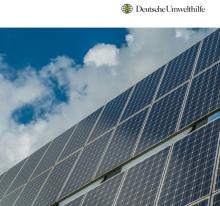
Every year, huge numbers of photovoltaic (PV) modules are being installed. This solar energy expansion greatly furthers the ecological transformation of the energy system. But to solve the climate crisis every aspect has to be taken into consideration. This is why this white paper wants to shine light on challenges currently occuring or to be expected in connection with used photovoltaic modules and their disposal in Germany.
To better implement the goals of a circular economy, this paper will retrace the steps in the lifecycle of a photovoltaic module and analyse problems and possible solutions along these stages. After a brief description of the occuring challenges, opportunities and solutions deemed to be effective and sensible in these matters are presented.