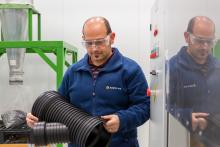
The Hungarian Ministry of Finance approved a HUF 197.85 million non-refundable grant for Hutoepito, the parent company of KleanLabs, in order to fund research, development and innovation activities under the Upcycling of closed-cell rigid polyurethane foams project, which ran until 31 January 2025.
Following the success of the sixth European Food & Beverage Plastic Packaging Summit which brought 100+ senior industry professionals to Antwerp in February 2022, the event will be returning to Belgium. The seventh Summit will take place in Antwerp on 15-16 February 2023.
The Ocean Package UG is a young and sustainable company from Munich with the goal to make e-commerce more environmentally friendly and sustainable. For this purpose, they have designed reusable packaging made of recycled polypropylene, which contains a proportion of collected plastic from the North Sea. Their product can be used 20 times more often than conventional cardboard packaging.
CIMPA, an EU-funded H2020 project, aimed to develop a recycling chain for post-industrial and post-consumer multilayer films from food and agricultural applications. This complex approach combines innovative compositional sorting, mechanical and physical recycling and an advanced decontamination process.
AIMPLAS, the Plastics Technology Centre, has created its own trademark to certify that reusable food packaging is safe and retains its properties after repeated washings. The trademark responds to companies’ need to adapt their products to regulations promoting the circular economy in order to acquire a market advantage.
The consortium CIRCULAR FoodPack worked on solutions to enable the circular use of plastic packaging, focusing on the most sensitive product category: food. The project aimed to develop recyclable packaging with at least 50% post-consumer recyclates incorporated behind a functional barrier.
The LIFE CIRC-ELV project has developed a new process for managing end-of-life vehicles to recover bumpers and fuel tanks, recycle the materials and use them to manufacture pipes and new parts for vehicles. Using this recycled plastic in products from this industry and others will help reduce the carbon footprint by 85%.
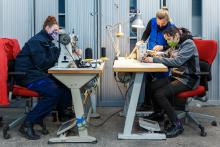
remesh is a socio-professional business workshop with an environmental impact. Most of its employees are women from disadvantaged background. The workshop is also providing a circular economy business model as they reuse advertising banners and meshes to make new products that are fashionable but sustainable.