In operation since 2007, PET to PET Recycling Österreich GmbH produces food-grade recycled PET which is used for “bottle-to-bottle recycling”. Old PET bottles are turned into new ones in this resource-efficient recycling loop.
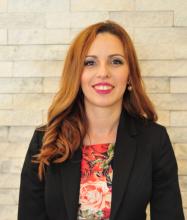
Simina Lakatos has been founding president of the Ernest Lupan Institute for Circular Economy and Environment (IRCEM) since 2012. She has economic and technical knowledge, abilities and experience: she holds a B.A. in Economics and a B.A. Honours in Materials and Environment Engineering. She obtained a Doctorate in Engineering and Management in 2011 after defending her thesis on Corporate Social Responsibility.
Simina has been part of the Department of Management and Engineering Economics of UTC since 2011, where she teaches and researches the following areas: sustainable development with a focus on the circular economy, strategic management with a focus on the social economy, enterprise assessment and marketing and international management, all of which helps her to develop IRCEM. Her focus is on accelerating the transition towards circularity from the bottom up with concerted actions, developing practical and scalable solutions, organising local/regional/EU campaigns, and communicating and involving others in the dissemination of information on the circular economy and messages on sustainable development. Simina is Romanian and speaks fluent English and Italian.
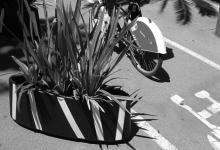
The ecopixel® material is made of 100% Low-Density Polyethylene (LDPE) that melts at only 120°C, reducing the ecological impact during transformation. It can be re-melted an infinite number of times without altering its properties and produces a unique colour pattern.
Attero is a waste management company with a very strong circular focus: it collects waste and converts it into secondary raw materials and produces energy from waste.
Laura Cutaia, researcher at ENEA, is an Environmental Engineer (1996) with a PhD in raw materials engineering (2002). Her main research topics are:
Industrial ecology and symbiosis,
Technology for raw and secondary materials treatment,
Resources management,
Life Cycle Assessment,
Environmental certification,
End of life management.
Laura Cutaia is responsible for making the most of resources at ENEA , where she is working on the circular economy and resource efficiency, industrial ecology and symbiosis, LCA, environmental certification schemes, the REACH regulation and sustainable industrial areas (more information).
Laura Cutaia is also president of SUN - Symbiosis Users Network (Italian network for industrial symbiosis) and president of UNI CT 057 on the circular economy that works with ISO TC 323 on the circular economy. UNI is the Italian body responsible for standardisation.
As an adviser for environmental and climate policy, Leon de Graaf particularly follows policies related to the circular economy, trade and climate, low-emission mobility, implementation of the Paris climate agreement (COP21) and the European emission trading system (EU ETS). He is also deputy manager of BusinessEurope's corporate Advisory and Support Group (ASGroup). Prior to joining BusinessEurope, Leon worked at the research consultancy Ecorys, focusing on renewable energy and international development issues, at DG COMP on energy and environmental subsidies in Europe, and at the Dutch Environmental Assessment Agency (PBL) on indirect ETS costs for energy-intensive industries. Leon has a MSc in environmental economics and climate change from the London School of Economics, and a BSc in business economics from the University of Groningen.
The Ellen MacArthur Foundation is a UK charity which aims to speed up the transition to the circular economy. Since it was set up, the charity has emerged as a global thought leader, putting the circular economy on the agenda of decision makers across business, government and academia.