This online meeting on 18 September 2023 will discuss which further recycled nutrient products might be appropriate for certified Organic Farming, based on practical examples, and under what conditions they might be considered.
Questions considered: solubility and plant availability of nutrients, origin of raw materials, chemicals used in recovery process and life cycle assessment, contaminants and safety.
Examples will be: calcined phosphates, biochars, phosphate fertilisers from ashes, recovered ammonium sulphate, recovered nutrients from aquaculture and other marine wastes.
Do you know any outstanding organisations dedicated to awareness raising and citizen engagement on the circular economy? As CE experts and members of the circular community, you are invited to share links and insights into these Centres of Excellence via a survey which is being carried out by the Citizens Engagement and Behaviour Change Leadership Group.
The MixMatters project aims to optimise the value derived from mixed biological waste. It will introduce a groundbreaking, integrated and adaptable solution for efficiently harnessing the potential of mixed bio-waste.
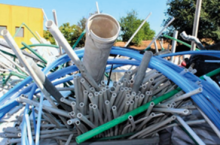
The "Waste REcycling Project" (WREP) is a pilot scheme developed by PVC Forum Italia, the national association of producers, converters and recyclers of PVC (polyvinyl chloride), in collaboration with VinylPlus, the European PVC value chain association.
It aims to make the collection, sorting and recycling of PVC waste from demolition/renovation, bulky waste and waste management centres more efficient, using a consolidated and accredited traceability methodology.
Hutoepito has been awarded a HUF 197.85 million non-refundable grant by the Hungarian Ministry of Finance to fund research, development and innovation activities under the Upcycling of closed-cell rigid polyurethane foams project.
The widespread use of polyurethane foams in various industrial technologies produces high volumes of rigid PU foam waste. Proper handling of this is essential for environmental, social and economic reasons.
The goal is to produce upcycled polyurethane foam products.
The researchers first identified the upcycling opportunities of closed-cell polyurethane foam materials and purchased the necessary machinery. Later, they started production of upcycled polyurethane foam blocks and sheets, and now they are developing prototypes.
The European Recycling Conference 2023 will take place on 28 September in Brussels.
This year, EURIC is teaming up with DENUO, the Belgian waste management and recycling federation, to shine a spotlight on car recycling. Why? The automotive industry is going through a major revolution. By 2035 - practically tomorrow in terms of industrial value chains - combustion engine vehicles will be phased out and replaced by electric vehicles (EVs). This transition will have a significant impact on all the players involved, considering that the industry provides 12.6 million direct and indirect jobs in the EU. Recycling is no exception.
The European Commission has launched a new call for tenders under the European Maritime, Fisheries and Aquaculture Fund (EMFAF) which will be particularly relevant to stakeholders working on ship recycling.
The call will finance a study providing the European Commission with an up-to-date analysis of the economic dynamics and effects of the use of controversial open registers for vessels, including the impact on the environment.
In recent years, plastic waste generation has become a prime concern in the global political arena.
A dedicated strategy on plastics was adopted at EU level, leading to the Single-Use Plastics Directive. Nonetheless, plastic waste management data show that achieving a circular economy for plastics in the EU is still a long way off. Available studies suggest that plastic waste generation may stay high in the future or even increase without ambitious circularity policies.
This report looks at the challenges associated with plastic waste generation and discusses the potential for using chemical recycling technologies as part of an ecosystem of solutions for increasing the circularity of plastics. It is based on evidence collected through desk-research.
In view of the ongoing regulatory developments in the field of the Packaging and Packaging Waste Regulation, this in-person event on 4 July will discuss the potential of using chemical recycling technologies as part of an ecosystem of solutions for increasing circularity of plastics.
Biodiversity is both vital for healthy ecosystems and the foundation of our well-being and economy. However, it is under severe threat. The root of the problem is our current unsustainable production and consumption systems. The circular economy is key to transforming these systems.
This briefing explores how the circular economy can reduce the impacts of production and consumption on biodiversity, with a focus on reducing primary resource demand, preventing pollution and biodiversity-friendly sourcing.