Recycling is key for the circular economy. Chemical recycling could one day become a trouble-shooter solution for any remaining unrecyclable applications and replace incineration. However, it is not yet a sustainable technology.
Ecopreneur.eu - the European Sustainable Business Federation - has concerns about linear economy lock-ins, high CO2 emissions, competition with mechanical recycling, lack of scale, low quality, toxic residues and large investments being drawn away from SMEs going circular.
Therefore it advocates supporting the development of chemical recyclingonly if it is:
net-carbon positive,
used for otherwise unrecyclable residues,
with maximum quality,
scalable,
at costs reflecting the waste hierarchy, and
matched by equal support for SMEs on circular design.
In 2020 the EU’s circular material use rate reached 12,8 %, i.e. almost 13 % of material resources used in the EU came from recycled waste materials, according to Eurostat.
The circularity rate - which is part of the EU monitoring framework on the circular economy - is the share of material resources used coming from recycled waste materials, thus saving extractions of primary raw materials.
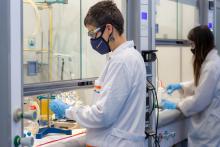
The EROS Project, with the participation of AIMPLAS and ITC, is working to develop new recycling processes to recover composite materials from the aeronautics and wind turbine sectors to manufacture new products for the transport and ceramics industries.
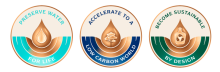
Reduce water use in Diageo's operations with a 40% improvement in water use efficiency in water stressed areas and 30% improvement across the company.
Other (Sustainable management of water)
To be achieved by:
Replenish more water than Diageo uses for their operations for all their sites in water-stressed areas by 2026.
Other (Sustainable management of water)
To be achieved by:
Invest in 150 projects to improve access to clean water, sanitation, and hygiene (WASH) in communities near Diageo sites and local sourcing areas in all of Diageo's water-stressed markets.
Other (Sustainable management of water)
Start Date:
Engage in collective action in all of their Priority Water Basins to improve water accessibility, availability and quality and contribute to a net positive water impact.
Recycling (also including specific waste streams)
To be achieved by:
Achieve zero waste in Diageo's direct operations and zero waste to landfill in Diageo's supply chain.
Recycled materials as part of raw materials demand (recycled content)
To be achieved by:
Ensure 100% of Diageo's packaging is widely recyclable (or reusable/compostable).
Recycled materials as part of raw materials demand (recycled content)
To be achieved by:
Continue to reduce packaging and increase recycled content in Diageo's packaging (delivering a 10% reduction in packaging weight + increasing the % recycled content of the packaging to 60%).
Recycled materials as part of raw materials demand (recycled content)
To be achieved by:
Ensure 100% of Diageo's plastics are designed to be widely recyclable (or reusable/compostable) by 2025 and achieve 40% recycled content in Diageo's plastic bottles by 2025, and 100% by 2030.
Other (Sustainable agriculture management)
To be achieved by:
Provide all of Diageo's local sourcing communities with agricultural skills and resources, building economic and environmental resilience (supporting 150,000 smallholder farmers).
Other (Sustainable agriculture management)
To be achieved by:
Develop regenerative agriculture pilot programmes in 5 key sourcing landscapes.
Other (Accelerate to a low carbon world)
To be achieved by:
Become Net Zero carbon in Diageo's direct operations.
Other (Accelerate to a low carbon world)
To be achieved by:
Reduce Diageo's value chain carbon emissions by 50%.
Other (Accelerate to a low carbon world)
To be achieved by:
Use 100% renewable electricity across all of Diageo's direct operations.
Society 2030: Spirit of Progress is Diageo's 10-year action plan to help create a more inclusive and sustainable world. This global leader in beverage alcohol has set itself 25 goals aligned to the UN's SDGs.
In 2018, the National Institute for Circular Economy (INEC) launched an Operational Programme on Purchasing and Circular Economy, together with the Métropole du Grand Paris and the Observatoire des Achats Responsables. Drawing on participants' experiences, these guidelines aim to guide private and public buyers through integrating the circular economy into their purchasing policies.
Every year, huge numbers of photovoltaic (PV) modules are being installed. This solar energy expansion greatly furthers the ecological transformation of the energy system. But to solve the climate crisis every aspect has to be taken into consideration. This is why this white paper wants to shine light on challenges currently occuring or to be expected in connection with used photovoltaic modules and their disposal in Germany.
To better implement the goals of a circular economy, this paper will retrace the steps in the lifecycle of a photovoltaic module and analyse problems and possible solutions along these stages. After a brief description of the occuring challenges, opportunities and solutions deemed to be effective and sensible in these matters are presented.