Renewable energy technologies, such as wind turbines, solar photovoltaic panels and batteries, are essential for Europe’s transition to climate neutrality. Deployment, maintenance and replacement of this infrastructure requires significant resources, including many substances included in the EU list of critical raw materials.
Waste arising from end-of-life clean energy infrastructure is projected to grow up to 30-fold over the next 10 years, presenting significant opportunities to reduce consumption of scarce raw materials by recycling metals and other valuable resources back into production systems.
Circular economy approaches such as repair and upgrading of equipment and recycling of end-of-life infrastructure can underpin the sustainability credentials of EU renewable energy.
France adopted its comprehensive Anti-waste Law in 2020. The law aims to eliminate waste and pollution from the design stage and transform the system of production, distribution and consumption from a linear to a circular economic model. It encourages businesses across various sectors, municipalities and citizens to eliminate waste and adopt more circular practices.
Policymakers, municipalities, NGOs and businesses worked together with the public administration to identify a richer range of needs, solutions and policy measures. As a result, the law is ambitious and contributes to a system-wide transition towards a circular economy.
Pryme converts plastic waste into valuable products on an industrial scale. It has developed a new approach to an existing and proven chemical recycling technology. Pryme has optimised the pyrolysis process by adding proprietary characteristics.
The Commission has opened a public consultation on the review of the Directive on the end-of-life vehicles (ELV). It is targeted especially at two stakeholder groups: 1) citizens with a general interest in the area of end-of-life vehicles; 2) stakeholders (economic operators, NGOs, public administrations…) who have specific knowledge and/or interest about end-of-life vehicles. Let's participate!
CleanBags machines empty and internally disinfect bags used in healthcare facilities. The disinfectant used is chlorhexidine digluconate which has a broad spectrum of action, meaning that it acts on bacteria and viruses, even COVID-19.
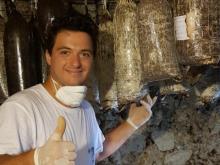
Coffee grounds contain many nutrients which are excellent for growing mushrooms. This secondary raw material is even ready for use, having been sterilised at 80 to 90°C by the coffee machine. What's left once the mushrooms have been collected is a good fertiliser.
ReNewTex is an innovation network aiming to help tap synergies and graduallytransform the carpet and rug industry from a linear to a circular business sector.
It works as a moderated matchmaking platform where people can connect to further common ideas and needs through technological projects. After finding the topics, it supports companies in finding the right investment strategy and getting the project going.
ReNewTex hosts talks on sustainability or on specific topics. ZENIT, the agency for innovation and European affairs of the German State of North Rhine-Westphalia, moderates the talks, looking for new members and support with project planning and funding.
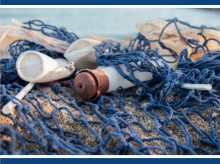
The International Resource Panel think piece provides policy options to reduce marine plastic litter and achieve the Osaka Blue Ocean Vision, which voluntarily commits G20 countries to “reduce additional pollution by marine plastic litter to zero by 2050 through a comprehensive life-cycle approach”.
The report shows the marine plastic litter trends relevant to 2050, summarizes the current plastic policy landscape and explores policy upstream and downstream interventions to reduce marine plastic litter and to transition to a circular plastic economy. They include, among others, actions to design out waste, incentivise reuse, and exploit market-based instruments.