RECICLOS provides incentives for recycling cans and plastic beverage bottles. When people recycle using the app, they receive points that can be used to try to win prizes or given to local projects.
Yuman Village is a temple of the circular economy located in Brussels. It offers a unique 'one stop shopping' experience that encourages the emergence of new circular economy models, creates local jobs and reduces the number of trips needed to buy sustainable and local products.
The final part of the LIFE 2021 call for proposals is open! The deadline for applications is 10 March 2022 at 17:00 CET.
Under the topics Circular Economy & Quality of Life and Nature & Biodiversity, specific projects are financed concerning, amongst others, used textiles/textile waste and high quality compost from collected organic waste.
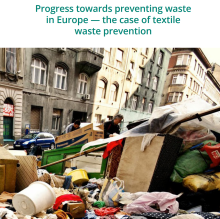
Waste prevention is the best waste management policy option, according to the waste hierarchy - the EU's main rule for the environmental ranking of waste management policies. Its main objective is to reduce waste generation, the environmental impacts of waste management and the hazardousness of the waste generated.
To support this objective, the EU and all its Member States have put in place legislation that promotes activities in products' life cycles aimed at reducing the amount of waste generated.
This report aims to assess progress towards the main objective of waste prevention: decoupling (i. e. breaking the link between waste generation and economic growth).
Within the framework of the Circular Economy Initiative Deutschland (CEID) and its three interdisciplinary and cross-sectoral working groups, more than 130 experts from industry, science and civil society have summed up their findings in the Circular Economy (CE) Roadmap for Germany, which consists of a consolidated opinion addressing society as a whole.
This Roadmap, which has focused - right from the beginning - on shaping a consistent and common target vision for a circular economy in 2030, is a scientifically-based framework for action that systemically describes the necessary steps for Germany to transition to a CE and provides decision-makers from politics, industry and science with concrete recommendations for action.