Join one of the new CCRI communities of practice to benefit from focused, in-depth exchanges with other circular frontrunners. Tap into ideas, tools and experience of others on the same path to create better solutions, faster.
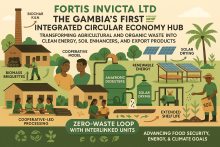
Fortis Invicta Ltd is launching The Gambia’s first integrated circular economy hub. This replicable model is aligned with the principles of the EU Green Deal and the African Circular Economy Alliance (ACEA) and is designed to transform agricultural and organic waste into clean energy, soil enhancers and high-value export products.
The CIRC Hub is a free Erasmus+ platform that equips educators to teach circular economy skills to adults, especially those at risk of exclusion. It offers modular tools, hands-on learning and inclusive methods to foster entrepreneurship, job readiness and sustainability in the circular economy sector.
While circular economy practices offer substantial environmental and economic benefits along with local job creation, their implementation requires significant adjustments in working conditions and practices.
This briefing dives into two of the circular building pathways identified as having high social impacts in the Circular Buildings Coalition’s 2024 Four Pathways Report: 1) Build with the Right Materials; and 2) Build Nothing.
These pathways are explored, along with their regulatory and market-level drivers, barriers and the measures needed to safeguard workers.
UtilDeco Group SRL has become Romania’s flagship work-integration social enterprise.
In 2023, it linked its textiles and coffee operations in a circular-economy pilot scheme: fabric off-cuts from uniform production and empty jute coffee sacks were upcycled into OPYA Fashion, a limited-edition collection of jackets, totes and accessories.
The enterprise is now scaling circularity through two major projects, one on digital product passports in textile products and the other on hiring workwear.
The annual Circular Economy Insights Series helps shape strategies and informs the development of support for communities of practice across Ireland. It highlights research gaps and will guide work in this area.
The 2025 report is designed to support an evidenced-based approach to public engagement and communications for a circular economy. It integrates best practices, targeted market research, socio-demographic analyses and community initiatives to provide key insights and statistical evidence on the specific trends currently driving circular economy behaviour in Ireland.
It aims to strengthen capacity for high-quality communications and public engagement to ensure that Ireland is informed and enabled to participate in, and benefit from, the circular transition.
On 25 June, the Leadership Group on Citizen Engagement & Circular Behaviour hosted the EU Circular Talk "Mainstreaming Circularity: Empowering Citizens for the Transition”. This webinar examined practical pathways to build understanding, shift mindsets and accelerate citizen behaviour change towards the circular transition.
This session will explore the impacts of the EU's “clean, competitive and circular” policies on communities, including indigenous peoples and young people, and consider how to foster intergenerational equity and participation, starting from the raw materials agenda.
This webinar will address the development of social innovation action plans and their deployment and application. Come and gain insights from experts, projects and cities leading systemic change through social innovation!
To achieve a truly circular economy, citizen engagement must move from the margins to the mainstream. This EU Circular Talk explored how we can embed circular thinking into everyday life through communication, education and practical tools that empower people to act.
Speakers and participants examined practical pathways to build understanding, shift mindsets and accelerate the circular transition—one citizen at a time.