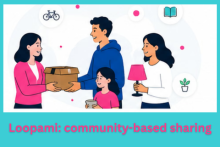
Loopami is a Milan-based platform which creates local communities of people interested in sharing and reusing items. It's still in the testing phase, but the initiative reduces consumption and waste while also forging closer ties between neighbours.
This report is part of the overarching project Circular.ie and was presented during the inaugural conference 'Circularity Communicated' in Dublin, on 30 September 2026.
It brings together insights from national public opinion research, behavioural research, campaign performance data and community-level activity to provide a comprehensive picture of public awareness, understanding and engagement with the circular economy in Ireland.
The report seeks to identify not only what the public knows about the circular economy, but also how awareness translates into understanding, trust, participation and behavioural change.
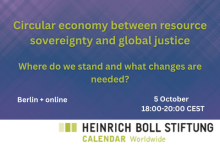
This event brings together representatives from the Global South, policymakers, academia, business and civil society to discuss solutions for a circular economy that strengthens global justice.
It is part of Alternative Raw Materials Week, and is organised by the Heinrich Böll Foundation and Germanwatch who are hosting a panel discussion on the topic of a fair and global circular economy.
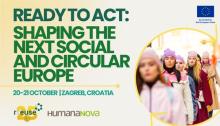
This conference will look at how social and circular practices operate in Croatia and across Europe, and what policy and funding frameworks they need.
What can “old” and “new” Member States learn from each other in policy and practice? How do EU‑level policies translate into national laws, and what important gaps remain?
Current methods of dealing with end of life ships are, to say the least, sub optimal. They cause injury and death to underpaid workers and harm the environment.
The NGO Shipbreaking Platform is working to change this. During this event, participants will showcase and exchange ideas for good practices and strategies for ship demolition, design, waste management and material recovery.
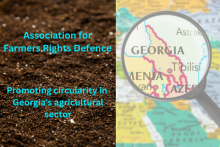
The Association for Farmers Rights Defence (AFRD) in Georgia is working with farmers, researchers, innovators, SMEs and local communities to develop circular value chains. Agricultural waste is used as a raw material, cutting waste and helping farmers.
This #EU Circular Talk will explore how Europe can accelerate a circular economy that is environmentally sustainable, socially just and centred on people’s wellbeing.
Through perspectives from policy, business, research and civil society, participants will discuss how circular economy initiatives can deliver environmental, social and economic benefits, and how different actors can ensure that no one is left behind in the transition.
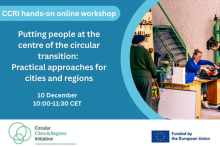
The circular transition cannot success unless it works for and with people.
You don't need to reinvent the wheel though. Across Europe, local authorities are building on existing initiatives, networks and community energy to connect social and circular objectives in practical ways.
This workshop will explore what those approaches look like in practice.
TexCycle comprises the textile recovery initiatives provided by Eurotex Ltd.
Textiles are collected in Western Europe and the USA, transported to the facility in Bulgaria and directed to the highest-value recovery option: reuse, recycling or energy recovery.