The European Investment Bank has signed a loan agreement of up to €30.75 million with Renewcell. The Sweden-based fashion innovator has devised a way to turn discarded clothing into Circulose®, a pulp from which new fabric can be made. After proving their concept, Renewcell will use the loan to build their first full commercial-scale recycling plant, able to produce 60 000 tonnes per year.
Join the online workshop on Traceability, the accuracy of information and market surveillance in the Textile Industry which will be held on 12 July 2021, from 10:00 to 13:00 CEST, as part of the consultative process for the development of the Strategy for Sustainable Textiles.

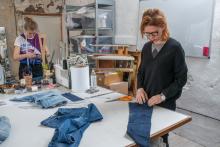
Textiles are an important issue for cities, as people generate more and more textile waste. City authorities are required to provide for separate collection of used textiles but have limited ways of putting the waste generated to good use.
Eurocities’ paper on circular textiles is published ahead of the Commission's new Strategy for Sustainable Textiles, planned for autumn 2021, to help the EU shift to a climate-neutral, circular economy (CE) where products are designed to be more durable, reusable, repairable, recyclable and energy-efficient. It focuses on a sustainable recovery of the textile sector from the Covid-19 crisis by:
making it more competitive,
applying CE principles to production, waste management, etc.
and directing investment, research and innovation.
Schijvens has been producing corporate uniforms for more than 150 years now. In 2017, they began collecting customers' old clothing, shredding it and mixing the textile fibres with shredded PET-polyester ones from sportswear, fishing nets and bottles. This led to 100% recycled yarn, which is used to make new fabrics and ultimately new uniforms.
This study aims to provide information about circular economy perspectives in the management of textile products and textile waste in the European Union. The report improves the understanding of current value chains in the manufacturing and retailing of apparel products in the EU and provides a detailed picture of material flows in the EU textile sector in a global context.
This joint position paper from the Wardrobe Change coalition contains recommendations for the EU Strategy for Sustainable Textiles. It has been signed by 25 civil society organisations. The paper sets out recommendations structured around four overarching principles:
Make sustainable textile products the norm
Drive resource-sufficient textile consumption
Leave the linear business model behind
Hold the EU textile industry responsible for its role in the world.
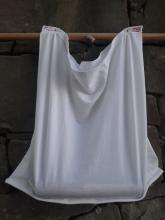
The cotton gauze grocery bag provides a unique design turning an environmentally-friendly cheesecloth gauze fabric into a sturdy mass produced grocery bag that later can easily be used at home as machine-washable cotton napkins, reusable cleaning cloth and much more.
Back in 1931, EMMA was founded as a social enterprise for injured workers from the Dutch State Mines. Hence, social entrepreneurship is in the DNA of EMMA Safety Footwear. Today, EMMA still employs about 100 people who need some additional support in the labour market. Making sustainable safety shoes was, therefore, a logical next step in EMMA’s journey towards a positive footprint.
The European Commission is organising a series of targeted stakeholder workshops to gather input on challenges and gaps as well as opportunities for the textile sector in the transition towards sustainability. The fourth workshop on 18 June 2021 from 9 a.m. to 1 p.m. CET will focus on “product design for sustainability in the textile value chain”.
On 7 June 2021, the Italian G20 Presidency and the EU are organising an online workshop on Circular Fashion to inform discussions in the G20. The workshop will explore the G20’s role in promoting the circular economy in the fashion sector.