How does Extended Producer Responsibility (EPR) work in practice and what does it mean for grassroots recyclers and second-hand operators?
This session will bring together representatives of waste pickers' organisations and second-hand operators from South Africa, Chile and Europe to share their experiences with EPR policies.
This webinar will discuss what the Circular Economy Act should deliver from a practical waste-management and implementation perspective.
It will look at how local waste systems, circular economy policy and producer responsibility schemes can better support Europe’s transition towards a circular economy.
The Joint Initiative on Circular Economy (JICE) brings together the EU’s largest public promotional banks and institutions.
Against the backdrop of the expected EU Circular Economy Act and a shifting regulatory environment, JICE is launching a webinar series to deepen market understanding of financing needs, gaps and bottlenecks for the circular economy across selected sectors.
This webinar will focus on critical raw materials from e-waste.
The European Sustainable Phosphorus Platform has launched aJoint Call asking that the Circular Economy Act address nutrients and material of biological origin.
If you feel that these materials should be included in the CEA, contact the ESPP before 10 June to support their call!
This EU Green Week 2026 partner event will bring together exemplary initiatives and projects from across Europe which are reimagining value chains and demonstrating novel circular systemic solutions.
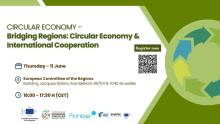
This event will explore how the circular economy drives EU strategic cooperation with Asia, Middle East and North Africa (MENA) and Ibero-America.
It will explore international partnerships, innovation opportunities and funding mechanisms that support sustainable development and circular economy initiatives.
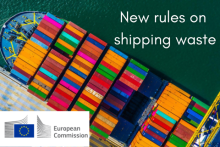
The revised Waste Shipment Regulationbecame effective on 21 May, facilitating shipments of waste for recycling in the EU and improving monitoring of exports of waste to third countries.
The Digital Waste Shipment System (DIWASS) has also been launched, and will cut red tape for businesses and authorities. Read all about it!
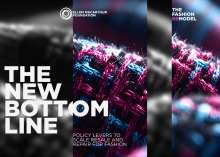
What would it take to turn resale and repair into a source of economic growth that uses fewer resources, produces fewer emissions and creates more local jobs?
That's the question at the heart of this new report. It demonstrates how a targeted mix of policy incentives could lift gross margins to 55% for resale and 41% for repair. It covers three policy shifts:
reducing VAT/sales tax on secondhand goods and on repair services
lowering labour taxes for jobs in resale and repair
Extended Producer Responsibility
The report focuses on existing levers that governments can pull, not new frameworks to invent. Together, they improve margins per unit, reduce labour costs and ensure producers pay more of the true costs of linear production, giving resale and repair the conditions they need to scale.
The new Directive on Empowering Consumers for the Green Transition will introduce stricter criteria governing sustainability marketing practices as from 27 September 2026.
This webinar will clarify the implications of these new anti-greenwashing provisions for moulded fibre products and outline strategies for remaining competitive while ensuring full compliance with the revised legislation.
This webinar will explore the challenges and opportunities facing bioeconomy stakeholders in underrepresented regions and present the support mechanisms offered by BIO-INSPIRE's cascade funding Open Call.