Bio2Materials creates 'leather' from apples
Bio2Materials is a company which makes a 100% biodegradable 'leather' from apples – the main type of fruit grown in Poland.
Cette section présente diverses pratiques en matière d’économie circulaire, des processus innovants et des exemples d’apprentissage fondé sur l’expérience. Toutes les informations sont fournies par les parties prenantes elles-mêmes, qui restent responsables de leur exactitude et de leur véracité.
Pour pouvoir être publiées sur ce site, les bonnes pratiques concernées doivent avoir un lien avec l’économie circulaire. Les informations fournies doivent être claires et exhaustives, les résultats attendus doivent avoir un aspect pratique, et la contribution doit pouvoir jouer un rôle d’éducation et de sensibilisation. Les textes et contenus proposés sur ce site pourront être modifiés dans un souci de clarté et pour respecter notre modèle de présentation normalisé. Pour de plus amples informations, veuillez prendre contact avec notre secrétariat.
Vous souhaitez en savoir plus sur la façon dont nous sélectionnons les bonnes pratiques pour les publier sur le site? Les lignes directrices [EN] sont accessibles ici.
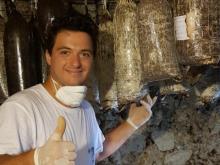
Bio2Materials is a company which makes a 100% biodegradable 'leather' from apples – the main type of fruit grown in Poland.
The Amorim Group is among the cork industry’s world leaders. It has a business unit focused on recycling, reusing, and reinventing the use of cork - alone or mixed with other raw materials - in the generation of new products and applications (construction, footwear, aerospace, railways, etc.).
The Horizon-2020 SHAREBOX project promoted industrial symbiosis by developing an online platform providing information on waste resources (i.e. energy, water, residues, etc.) that could be used to replace primary resources, to plant managers and other decision-makers.
Alchemia-nova, the Institute for innovative phytochemistry and closed loop processes, has colloborated with vertECO, GRETA and LooPi to develop three types of green walls, which treat wastewater to service water standards and create plant biomass and fertiliser.
Beewraps by Malu is a food packaging material designed and produced by a Polish family company to replace food foil, aluminum foil or disposable plastic containers with a biodegradable and reusable alternative.
reWINE LIFE is a Catalonian project, running from 2016 to 2020 and co-financed by the EU's LIFE Programme. It sought to demonstrate the viability of reusing glass bottles in the local wine industry.
Orybany is an ethical concept store located in the heart of Brussels working with a community of artisans and designers connected by the same values: "Human, Ethical and Diversity".
Veolia has been extending the useful life of plastic bottles using a PET (Poly Ethylene Terephthalate) plastic recycling process. A mechanical and chemical recovery process transforms the PET flakes into a product suitable for use with food.
Vanheede Biomass Solutions processes packaged or unpackaged food items that, for various reasons, are no longer fit for human or animal consumption. Fermentable residue is gathered and processed at a bio-methanisation plant in order to generate green energy.
Veolia has developed expertise and built specific facilities to tackle the complex process of treating, depolluting and dismantling Waste Electrical and Electronic Equipment (WEEE). This is a valuable source of recyclable raw materials: ferrous metals, plastics and precious metals can all be recovered and reused.