The New Circularity Index scheme is a verification framework.
It is designed to measure and certify the circularity performance of products throughout their lifecycle. It assesses materials, energy, water and waste, evaluating the share of circular materials, renewable energy, recycled water and waste sent for recycling compared with the total resources used in production.
The Material Circularity Index analyses an organisation's material flows and determines what percentage of resources possesses circular potential.
The result is expressed as a percentage and broken down into two variants: ICM-Local, which focuses on circularity within organisational and operational boundaries, and ICM-Global, which takes a broader lifecycle perspective.
This report provides an analytical assessment of existing circular economy frameworks, standards and indicators from the specific perspective of automotive suppliers.
It examines the practical challenges of translating high-level circular economy objectives into measurable and operational indicators for industry.
E-circular is an NGO working to promote the circular economy in the Republic of Moldova. They have published a brief report about the country's national circularity rate and the tools used to identify that rate.
The CityLoops project was a Horizon 2020 project which ran from 2019 to 2023. It focused on circular economy solutions for bio-waste and construction and demolition waste (CDW). The project produced various tools, including this circularity assessment.
The CityLoops project was a Horizon 2020 project which ran from 2019 to 2023. It focused on circular economy solutions for bio-waste and construction and demolition waste (CDW). The project produced various tools, including this assessment method.
The CityLoops project was a Horizon 2020 project which ran from 2019 to 2023. It focused on circular economy solutions for bio-waste and construction and demolition waste (CDW). The project produced various tools, including this circularity assessment.
CircularTracker is an online circularity measurement tool. It enables businesses and institutions to assess, visualise, compare and communicate product circularity features in a standardised way.
This article identifies sustainable practices that are intended to reduce food loss and waste from the value chain, highlights the importance of sustainability accounting and reporting during each stage of food preparation, production and consumption and advances a theoretical model that clearly summarises different aspects related to environmental, social and governance dimensions.
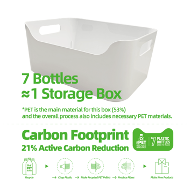
Energy Expert, an Alibaba Cloud company, uses carbon footprint accounting combined with digital technologies to track the CO2 performance of a new range of products, from the initial plastic waste to the final rPET product, and makes the information available to the consumer.