The RECERCO project recovered fired sherds, a form of waste generated when manufacturing ceramic tiles. It proved that it is feasible to use this as a secondary raw material for manufacturing new ceramic tiles and as a reinforcement agent for polymeric matrices to obtain composites for the construction industry.
PRIMUS was a research project funded under the Horizon Europe programme, which ran from 2022 to 2025. It researched new polymer recycling technologies, with a view to producing new recycled materials that meet the requirements for manufacturing high value products.
It produced a webinar series on Boosting Plastic Recycling and a number of training courses.
SISTERS was an EU H2020-funded project that aimed to design, implement and promote innovations to address bottlenecks at each stage of the food value chain. The end goal was a systemic reduction in food loss & waste.
The GLOPACK project investigated food packaging with no environmental footprint and the ability to extend the shelf life of food products.
It focused on biodegradable and home compostable food packaging made from agro-food residues, bio-packaging and battery-free RIFD bio-sensors to track food freshness.
EIT Climate-KIC is Europe’s leading climate innovation agency and community, supporting cities, regions, countries and industries as they work to meet their climate ambitions through systems innovation and place-based transformations.
Anna Brassa is part of EIT Climate-KIC's leadership team as a Deep Demonstrations Teams Orchestrator. The Deep Demonstrations project, launched in 2019, serves as a testbed for large-scale, place-based demonstrations of sustainable, regenerative living. She also oversees the work performed by Climate-KIC with the Government of Slovenia on the Deep Demonstration of a Circular, Regenerative and Low-Carbon Economy in Slovenia, developing pathways for a more radical transition to climate neutrality through a circular economy, using a systems innovation approach.
TEXroad is a Netherlands-based foundation that connects and aligns textile data from different sources. Its purpose is to promote and enable circularity in the textiles industry.
The SYMBA project (Securing Local Supply Chains via the Development of New Methods to Assess the Circularity and Symbiosis of the Bio-based Industrial Ecosystem) will help deliver bio-based solutions with reduced environmental impacts on soil, water and air quality.
The project aims to achieve this by creating an innovative method of industrial symbiosis which can be replicated across the EU, geared to the local/regional bio-based industrial ecosystem. This method will be used to help design zero-waste value chains.
Increasingly, plastic components are being used in vehicles rather than metal ones, as plastic is lighter. The automotive industry is gradually stepping up the percentage of recycled plastic to reduce its environmental impact.
AIMPLAS, the Plastics Technology Centre, is a non-profit research association active in the plastics industry. It has launched the SURFTOP Project to develop the use of recycled plastic in vehicle parts.
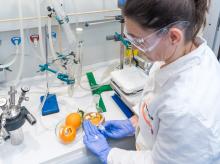
The BUILD-LIMONENE initiative is working on additives and biodegradable materials with a lower carbon footprint that can be used in the construction industry and become viable alternatives to the fossil-based materials currently available.
This new technology will contribute to the recovery of waste by using citrus peels and CO2 emissions.
From its base in the northern Netherlands, JC-Electronics supplies new, refurbished and repaired industrial electronics. By giving used and defective devices a second life, the company contributes to the circular economy and helps customers reduce their carbon footprint.