On 29 September - the International Day of Awareness of Food Loss and Waste convened by the Food and Agriculture Organization - the European Food Information Council (EUFIC) launched a one-month food waste campaign, together with a new quiz on Evaluate Your Food Waste Practices!
The quiz provides personalised tips encouraging people to take simple steps at home. It's intended to help identify what kind of information they need to reduce the amount of food they waste. Once people have a better understanding of how to reduce food waste, they'll feel empowered to act.
Despite growing efforts by political bodies, companies and researchers to support the transition towards a more sustainable and circular economy, we are still behind schedule.
The seminar on 17 October will address the following challenges that are slowing down this transition:
the need for quantitative but easy-to-handle methods to support decision-making in the product design phase, particularly concerning material selection for sustainability,
the potential rebound effects that undercut the expected sustainability gains of moves towards circularity.
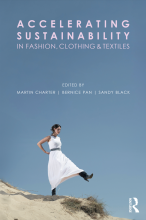
This book collates leading-edge research and industry best practice to provide a ‘one-stop shop’ exploring the complex and interconnected issues surrounding sustainability in the sector.
It includes innovative examples from different regions, addressing topics from policies to supply chain issues and materials innovation. Five unique case studies of sustainable businesses provide examples of pioneering practice. The book brings together both academic and industry perspectives on the critical areas that require immediate action to move towards a more sustainable fashion, clothing and textile sector.
Part VI features five chapters by leading authors covering the circular economy in the sector, including a chapter by Professor Jacqueline Cramer.
VAIVÉN 2023: Circular Economy Festival is a meeting and exchange space of the Circular Economy Coalition for Latin America and the Caribbean that seeks to promote and celebrate the development of the circular economy in the region.
Public authorities - policymakers, procurement professionals, local and regional authorities, and other public sector actors - have an important role to play in the transition towards a more circular built environment and have a range of policy levers at their disposal to stimulate demand for circular skills. Using circular strategies in the built environment can help reduce the embodied emissions of building materials by 50%.
This interactive webinar will show how to train staff and how local authorities can work with stakeholders to train the whole value chain to promote circularity.
The webinar will present the guidance for policymakers as well as training materials developed by the BUS-GoCircular project. It will also explain how public authorities can use the Fundamentals Training Packs for SMEs in their requirements in tenders.
Nordic Circular Summit is the biggest annual conference on the circular economy in the Nordic region. NCS2023 will take place on 17–18 October, both in person in Reykjavik, Iceland and online. It will be co-hosted by Nordic Circular Hotspot and Nordic Innovation and is an official World Circular Economy Forum Side Event and a pre-event to the prestigious Arctic Circle Assembly.
This EC GPP Helpdesk webinar on 27 September will analyse how public procurement can be used as a strategic tool to support the upskilling and reskilling of the construction workforce and help futureproof the European construction sector.
After Pazardzhik, Barcelona and Naples, the Biocircularcities partners are coming to Brussels on 28 September. Come and be inspired to bring the Biocircularcities approach to your garden by learning more about the project and its results. Discuss the future of a circular bioeconomy in Europe and exchange notes with your peers.
It aims to influence policy discussions by enabling progressive businesses across sectors and value chains to join forces. It brings together companies committed to using climate neutral and sustainable materials and which are raising awareness about the need for EU measures to help decarbonise materials.
The key objective is to drive the development and implementation of and support for more ambitious, future-proof policies, programmes and initiatives in Europe with a view to creating an ecosystem moving rapidly away from the energy- and resource-intensive production of materials.
Circular Week, an international series of events dedicated to sustainable development and the circular economy, will take place this year from 23 to 29 October.
Look through the full agenda of events and sign up!