GIND is an innovative company dedicated to developing sustainable and long-lasting solutions for road surfaces and outdoor spaces. Its BIO DILE™ joint filler replaces traditional, resource-intensive and short-lived materials with more environmentally-friendly alternatives made from recycled, sun-dried stone aggregates and bio-based binders derived from cashew nut shells and natural asphalt. At the end of the filler's lifecycle, it can be fully recycled.
The World Circular Economy Forum 2025 (WCEF2025) will take place in South America. It will explore the potential of tropical solutions for sustainable growth, the power of regeneration and bioeconomy strategies, along with how the production sector is driving the transition toward a circular economy. The forum will also address key topics relevant to Latin America and the world.
Accelerator sessions will be held by WCEF collaborators on 15 and 16 May.
Up2Circ (Boosting the uptake of circular business model, product and process innovation) is an international project funded by the Horizon Europe programme which aims to accelerate and scale up the transition of European SMEs towards a circular economy.
Resources without identity become waste, and this issue must be tackled in order to foster the circular economy. This webinar will discuss methods for assigning appropriate information to goods, tracking them and then processing and transfering this data efficiently, using state-of-the-art technologies such as AI, visual tracking systems, the Internet of Things and common communication languages.
With demand for lithium-ion batteries increasing worldwide, developing a solid understanding of the environmental and social impacts associated with how they are used is becoming increasingly important.
This eventaims to discuss where we stand in terms of assessing the environmental and social impacts associated with lithium-ion batteries.
This second webinar in the Circular Economy Knowledge Hubs Webinar Series will showcase regional and global perspectives on implementing circular economy activities, with a focus on how knowledge platforms can drive awareness, build capacity and inspire action among policy makers, producers and consumers.
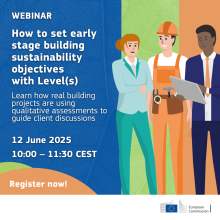
The built environment accounts for at least 40% of anthropogenic greenhouse gas emissions. For the Alps, it is key to use local resources effectively while upholding EU rules and promoting the adoption of common standards across the building value chain.
The European Interreg Alpine Space project BAUHALPS is endeavouring to meet these challenges by developing and testing a model that combines New European Bauhaus concepts with sustainability measurements and indicators in an innovative way.
INN-PRESSME is a consortium of 27 partners from nine countries helping European SMEs and companies develop bio-based solutions in the packaging, energy, transport and consumer goods sectors.
The project will shortly be holding its final event, bringing together investors, industry, policy makers, clusters, universities and research centres. It will be an opportunity to discuss the project results, technologies, market services and lessons learned, focusing on the innovativetest cases.
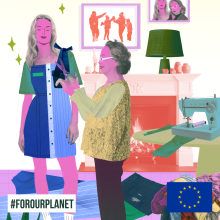
Businesses in Spain and around the world are adopting the circular economy as a new production paradigm. However, while the economic and environmental dimensions of the circular economy have been explored, its social impact (decent pay, gender equality, labour conditions) has been overlooked.
By surveying more than 210 workers in three countries and interviewing 90 stakeholders in Spain, the authors developed an inventory of circular jobs. They found that circular jobs in Spain follow the same pattern as the linear value chain, where women in resale, repair and recycling are the most vulnerable. Startups in resale and rental based on internet platform models have the highest earning quality but also high job insecurity, especially for women workers.
The sustainability certification TCO Certified has been driving social and environmental sustainability in the IT industry for over 30 years. Every third year, the certification criteria are updated to push sustainability where it matters most.
They are organising an event where they will discuss the steps needed to drive sustainability in four key areas (climate, substances, circularity and supply chain) and present their new Roadmap for Sustainable IT.