The European community PACCT for Sustainability (Product as a service to Accelerate Cooperation and Circular Transformation) will host a webinar on 25 June to explore how to finance product-as-a-service models.
Participants will be able to interact with RISE, ABN-AMRO and LINXFOUR, who will be talking about their experiences.
The FOODY EU project promotes entrepreneurial skills and employment of young people, using circular economy principles to combat unemployment. It provides comprehensive information on the management and environmental impacts of food waste, using the food industry and waste management sector to instill in young people the value of resource conservation.
ISO 59020 covers Circular economy — Measuring and assessing circularity performance.
It provides a structured approach for organisations to measure and assess their circularity performance. It aims to standardise the process by which organisations collect and calculate data, using mandatory and optional circularity indicators.
This standard will:
help organisations align with global sustainability goals
enhance transparency and accountability in environmental reporting
support strategic decision-making for sustainable resource management.
You can read a sample or purchase the full version on the ISO website.
Together with ISO 59004 and ISO 59010, these standards offer a complete toolkit for achieving a circular economy, from principles to measurement.
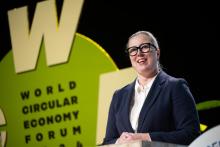
During the World Circular Economy Forum 2024, the European Commissioner for International Partnerships Jutta Urpilainen announced two initiatives intended to advance the circular economy at global level.
The establishment of the EU Circular Economy Resource Centre under the Global Gateway strategy will facilitate peer-to-peer exchanges and partnerships between EU and third-country stakeholders, fostering the uptake of sound circular economy policies and business models worldwide. The Commissioner announced a EUR 15 million commitment from the European Commission.
In addition, Commissioner Urpilainen launched the "SWITCH to Circular Economy in East and Southern Africa” programme. The European Commission will contribute EUR 40 million over five years to this programme, which will promote the transition to circular economies.
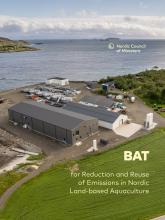
One advantage of land-based aquaculture is that emissions can theoretically be contained and reused. However, the techniques for doing so keep evolving. If the Nordic aquaculture industry is to grow in an environmentally sustainable manner, information is needed on the best available techniques.
The Nordic Council of Ministers therefore requested a report on the best available techniques for reducing and reusing emissions from land-based aquaculture. This report explores the state of play of Nordic aquaculture and takes stock of emerging and established techniques for reducing emissions and managing waste, with a focus on the circular economy. Improving waste management might improve the viability of land-based aquaculture, supporting the sustainable growth of this sector.
From 15 to 18 April, circular economy professionals from 168 countries came together at WCEF2024 to collaborate and turn ideas into action.
The Summary Report takes stock of the event: it presents the findings and key takeaways, including reports, tools and calls to action launched at the forum by partners, discussion highlights and key statistics.
The CEE2ACT project aims to empower Central and Eastern European countries to develop circular bioeconomy strategies. It has National Bioeconomy Hubs established in 10 countries across the EU.
It'll be holding the second webinar in its Knowledge Transfer series on 27 June.
The Waste Framework Directive mandates that from 2025, EU Member States must establish separate collection systems for used textiles.
This briefing provides an overview of the state of play of textile waste generation, collection systems, treatment capacity and the different classifications for used textiles in Europe. It also identifies factors which must be considered when implementing separate collection systems, with a view to fostering the circularity of textiles without inadvertently increasing exports, incineration or landfilling.
It is underpinned by a report from the European Environment Agency’s European Topic Centre on Circular Economy and Resource Use.
The publication of CEMBUREAU's Net Zero Roadmap is a key moment for the EU cement sector: the roadmap looks at its climate ambition, the key levers to decarbonise cement production, and the policies needed to get there.
Cement and concrete are also going circular. Circularity is an integral part of the net zero ambition, allowing for significant CO2 reduction throughout the cement and
concrete value chain. Over the past decades, the European cement industry has promoted circularity by using waste materials to make cement, both as raw materials and as fuel in its kilns.
This shift has picked up the pace over the last few years, with the adoption of new methods to develop the role played by cement and concrete in the circular economy.
Wales (Cymru in Welsh!) will be hosting the 2024 European Circular Economy Hotspot: Circular Economy Hotspot Cymru 2024.
The summit will take place on 7-9 October in Cardiff. It will be an opportunity to share Wales' circular economy achievements and aspirations, and learn about circular economy solutions from the public sector, private sector and communities from Wales and beyond.