This workshop brought together experts from various organisations to discuss topics like the undervalued importance of infrastructure in tackling climate change, discuss the markets for secondary resources, the relevance of deconstruction design to enable the renovation wave, and stress value-chains collaboration.
It has been established that the circular economy has a high leverage effect and some progress in this field has been made, but the circular economy has yet to top the political agenda. A strategic approach to circularity is urgently needed and should be developed, managed and implemented in a cross-ministerial capacity in line with efforts at EU level and together with partner nations.
Against this backdrop, the German Council for Sustainable Development (RNE) recommends organising the transition to circularity via a new, cross-ministerial governance mechanism coordinated by the German Federal Chancellery. RNE’s statement covers a further 13 recommendations, ranging from the need for social safeguarding instruments to expanding education and research.
Blue Room Innovation has developed a solution for some of the challenges facing ports: CIRCULARPORT. This blockchain-powered waste management solution makes ports greener and more efficient. A WastePassport has also been developed that connects waste disposed in port reception facilities to treatment plants.
Although previous researchers have explored the circular economy practices of different businesses in various contexts, only a few papers have focused on the sustainable preparation and consumption of food in the tourism and hospitality industry. This paper sheds light on case studies from hotels, restaurants and cafés that are located in urban tourism destinations.
This research suggests that catering businesses can implement a number of responsible initiatives by introducing preventive measures and recycling practices to curb food loss and the generation of waste. In conclusion, it finds that there is scope for regulatory authorities and policy makers to encourage hospitality practitioners to minimise food waste.
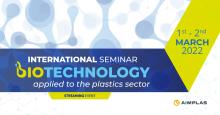
AIMPLAS organises its 1st International Seminar on Biotechnology Applied to the Plastics Sector on 1-2 March 2022, to discuss the main RDI developments and global solutions for the entire value chain. It tackles the use of organic waste to obtain new plastics, enzymatic recycling processes for plastics, the role of biotechnology in recovering complex waste, converting plastic industry scrap, etc.
On 21 January 2022 the ECESP Coordination Group 2020-2023 attended its third meeting which focussed on summarising the numerous achievements from the past year, including the recent Dubai Expo and what the ECESP had achieved there, its future plans and the 2022 programme.