Rice Tab is a technical board developed from rice husks, an agricultural byproduct widely available in Europe.
Designed for applications in architecture, interior design and furniture, it transforms what was once considered waste into a high-performance material with a new functional life in the built environment.
The LIFE Awards 2026 included the Circular Economy & Quality of Life category.
The winner proposed a replicable way to reduce the amount of WEEE generated, and one of the runners up designed tools to optimise wastewater treatment while reducing waster consumption.
How does Extended Producer Responsibility (EPR) work in practice and what does it mean for grassroots recyclers and second-hand operators?
This session will bring together representatives of waste pickers' organisations and second-hand operators from South Africa, Chile and Europe to share their experiences with EPR policies.
suHCO addresses the common challenge of accelerating the sustainability transition in the healthcare sector through a Horizon Europe Pre-Commercial Procurement process.
This workshop will introduce the suHCO project and its procurement approach, and outline the planned role and benefits of the Follower Network.
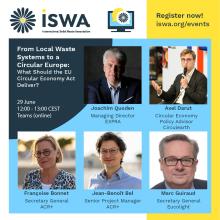
This webinar will discuss what the Circular Economy Act should deliver from a practical waste-management and implementation perspective.
It will look at how local waste systems, circular economy policy and producer responsibility schemes can better support Europe’s transition towards a circular economy.
This year, the World Circular Economy Forum (WCEF) will be held in South Asia – specifically in Gandhinagar, Gujarat, India.
The theme will be Circular economy: Transition for people and prosperity, engaging communities and businesses all over the world to build a successful future together.
This year, the World Circular Economy Forum will be held in Gandhinagar, India, and the theme is Circular economy: Transition for people and prosperity.
The call for accelerator sessions is now open: apply by 23 June!
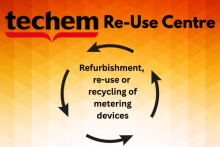
Energy services provider Techem has set up a Re-Use Centre promoting a circular, resource-efficient approach to equipment management in the building sector.
Decommissioned metering devices are brought to a centralised facility, evaluated and directed towards refurbishment by manufacturers, reuse of functional devices or components, or recycling of non-reusable materials.
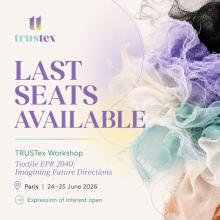
This workshop will use foresight to stress-test the foundations of textile EPR across a range of possible future scenarios.
Participants will identify key drivers and uncertainties shaping the future of textiles and EPR, discuss the issues with peers from across the textile value chain and contribute practical insights to discussions on the future design of EPR systems.