This report analyses 27 high-impact Horizon Europe and Horizon 2020 projects to inform the regulatory design of the forthcoming Circular Economy Act.
While the portfolio covers key intervention areas - as circular public procurement, critical raw material recovery, and industrial symbiosis, its primary focus is the reform of Extended Producer Responsibility (EPR).
The findings show that achieving the Act's ambitions will require a fundamental shift in EPR, from a waste-management financing mechanism to a strategic, data-driven instrument supporting industrial competitiveness, resource security, and circular value creation across Europe.
The CORE project is organising a two-day, in-person innovation event in Málaga. This ideathon will bring together a range of talents to develop innovative solutions inspired by regenerative design and the circular economy!
The final conference of the RISERS project will explore how standardisation can help scale industrial symbiosis and cross-sector resource efficiency across Europe, bringing together experts from industry, research, policy and standardisation.
Public authorities face considerable challenges in fields such as the circular economy, waste management, green public procurement and eco-design. Advice from someone who knows what they are talking about can sometimes be really helpful.
The TAIEX-EIR PEER 2 PEER programme is set up to facilitate just this type of assistance.
This report analyses 17 Horizon 2020 and Horizon Europe research and innovation projects relevant to circular public procurement to identify solutions that are sufficiently mature, transferable and policy-relevant to inform the Circular Economy Act.
Covering sectors including construction, bioeconomy, healthcare, renewable energy and cross-sector governance, the portfolio demonstrates that public procurement can be a powerful driver of circular transition by creating demand for secondary materials, supporting the uptake of circular solutions and strengthening the conditions needed for circular markets to grow.
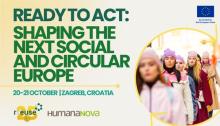
This conference will look at how social and circular practices operate in Croatia and across Europe, and what policy and funding frameworks they need.
What can “old” and “new” Member States learn from each other in policy and practice? How do EU‑level policies translate into national laws, and what important gaps remain?
Current methods of dealing with end of life ships are, to say the least, sub optimal. They cause injury and death to underpaid workers and harm the environment.
The NGO Shipbreaking Platform is working to change this. During this event, participants will showcase and exchange ideas for good practices and strategies for ship demolition, design, waste management and material recovery.
Recycling Europe’s flagship annual event, the European Recycling Conference, will bring Europe’s recycling industry back to the heart of EU policymaking at a defining moment for the sector.
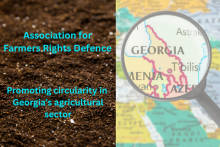
The Association for Farmers Rights Defence (AFRD) in Georgia is working with farmers, researchers, innovators, SMEs and local communities to develop circular value chains. Agricultural waste is used as a raw material, cutting waste and helping farmers.
This conference aims to discuss future scenarios for sustainable management of construction and demolition waste. It will showcase the achievements of the INERTWASTE project and present inspiring circular solutions.