Dit document is een samenvatting van de informatie die gedeeld werd tijdens het seminarie “Financiering van de circulaire economie” dat de FOD Economie op 6 juni 2017 organiseerde met verschillende sprekers uit de openbare sector en de banksector en met ondernemers van de circulaire economie.
Het concept van de circulaire economie wordt kort toegelicht, waarna oplossingen voor publieke en private financiering voorgesteld worden.
Er wordt tevens ingegaan op de moeilijkheden rond financiering waarmee de ondernemingen en de banken worden geconfronteerd.
Tot slot wordt door een vergelijking tussen de Belgische initiatieven op het vlak van circulaire economie en die van onze buurlanden de rol van België in Europa belicht bij de opkomst van dit nieuwe economische systeem. Verschillende aandachtspunten komen onder een rubriek “aanbevelingen” op het einde van het document.
The Brussels Regional Programme for Circular Economy (BRPCE) is an integrated strategy involving 111 measures aimed at delivering circular patterns at the city level. The main objectives of the BPRCE are:
to transform environmental objectives into economic opportunities
to anchor economic activities within Brussels’ borders, maximising resource circularity and boosting entrepreneurship, and
Together with a number of partner organisations, Circular Flanders and the Government of the Region of Flanders launched the Green Deal for Circular Procurement (GDCP) on 8 June 2017.
Attero is a waste management company with a very strong circular focus: it collects waste and converts it into secondary raw materials and produces energy from waste.
Circular Flanders is the hub and the inspiration for the Flemish circular economy. It is a partnership of governments, companies, civil society, and the knowledge community that will take action together. These organisations are the core of our partnership. Each one has committed to carrying out a specific action.
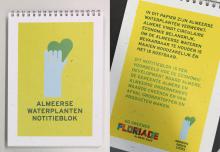
The city of Almere, working together with local stakeholders and the company Millvision, has developed an innovative circular economy partnership.
The aquatic plant which grows in the lake is a local and renewable input for paper production. It is also circular since something that would otherwise be discarded as waste is used as a raw material.