Woody and vegetable biomass has long been used to make heat. Recently, there has been a resurgence in interest in biomass energy production, because it is a carbon-free, abundant energy source. Biomass-based domestic heating systems do emit significant amounts of particulate matter, but biomass is still considered to be an attractive solution for residential heating systems based on renewable fuels.
Sicily is particularly interested in biomass as a raw material for producing energy because of the local soil and climate, and this trend could have significant, highly positive socio-economic consequences. This study aims to evaluate the potential of a cogeneration system in the biomass sector.
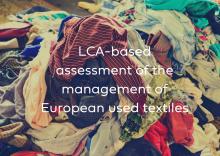
The quantities of used textiles collected in Europe are increasing, while the proportion of high-quality reusable garments is decreasing. Currently, around 50-75 % of the collected textiles is reused, whereas 10-30 % is recycled.
Towards 2030, however, it is expected that a smaller portion will be suitable for reuse, and that more will be fit for recycling. This is because the requirement of separately collected textiles is expected to divert textiles from mixed waste, which is not fit for reuse, as well as of a general trend of falling quality. The lifecycle impact assessment (LCA) of reuse compared to a new product confirms that the environmental impact of reuse is significantly lower than the production of a new garment.
Secondary raw material (SRM) markets are crucial for a circular economy. This is because SRMs enable recyclables to re-enter the production value chain, which reduces dependency on primary resources as a result.
This role is acknowledged in the EU circular economy action plan of 2020. However, if policy is to help establish or further develop such markets, we need to better understand the currently-fragmented SRM markets in the EU.
The research project Assessing the social impacts of circular strategies in the apparel value chain is a collaborative 4-year research project supported by the Laudes Foundation. This document presents evidence of the social impact of the circular economy in the textiles and apparel value chain in India, Spain and the Netherlands.
The ASEAN Circular Economy Stakeholder Platform (ASEAN CE Platform) is a regional facility helping Association of Southeast Asian Nations Member States achieve sustainable consumption and production by accelerating the transition to a circular economy.
The EU-ASEAN Strategic Partnership covers the circular economy, and the Platform is part of the EU-ASEAN Partnership on Circular Economy, endorsed by ASEAN Senior Officials on the Environment in 2018. The ASEAN CE Platform is hosted by the ASEAN Centre for Sustainable Development Studies and Dialogue at the College of Management, Mahidol University in Bangkok, Thailand.
The establishment of the Platform was inspired by the success of the European Circular Economy Stakeholder Platform in providing access to CE good practices and strategies.
The tExtended European project has come up with an innovative approach to recycling textile waste by developing a knowledge-based masterplan for optimised recycling of discarded textiles. The research combines recycling, waste-valorisation and data technologies to maximise the impact.
Twenty organisations from 10 countries have collaborated to create economically feasible and sustainable solutions for reducing waste in the textiles industry.
PEACOC was a pre-commercial H2020 pilot project for the efficient recovery of precious metals from European end of life resources with novel low-cost technologies.
Taranto Circolare is a platform that connects up companies, projects and funding with a view to fostering circular opportunities in the region.
It aims to create a network of actors that are in synergy locally, while also catering for national and international companies looking for opportunities in Puglia. It is driven by the Tondo association, which aims to develop and consolidate sustainable and circular projects in this urban area.
The platform will give companies, public authorities and organisations the opportunity to be part of a network implementing circular projects, provide specific tools and help actors measure the circularity of services and products.
The report Twin Transition in the Wood-Furniture Value Chain - State-of-the-art on Environmental Certifications Practices and Industry 4.0 in the Wood and Furniture Sector provides an overview of the current environmental and digital trends and practices affecting the wood value chain in its entirety. Taking a value chain perspective, the report outlines regulatory trends, new digital and technological developments, and emerging practices that will affect the sector as a whole.
By deploying smart systems and new production processes, European SMEs can optimise their usage of raw materials, improve their waste management and contribute to the development of a circular economy.
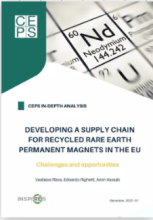
Rare earth elements are strategically important for the EU to sustain and accelerate its green and digital transition, particularly due to their use in permanent magnets. Rare earth permanent magnets are critical components in wind turbines and electric vehicles, as well as home appliances and consumer electronics.
However, faced with an expected surge in demand, limited domestic manufacturing capacity, high import dependency and rising geopolitical tensions, the EU’s ability to meet the future demand for rare earth magnets is at risk.
This report examines the barriers hindering the establishment of a viable magnet recycling chain in the EU, whilst estimating the extent to which recycling could offset the coming increase in demand for rare earth magnets.