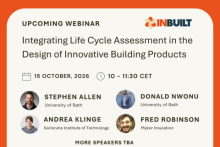
This webinar will explore how Life Cycle Assessment (LCA) can be both a rigorous environmental tool and a strategic asset for the product development of buildings and for supporting innovation, market readiness and commercialisation.
Industry experts will share practical insights on integrating LCA into sustainable product development, with a focus on the emerging and highly innovative products developed by the INBUILT project.
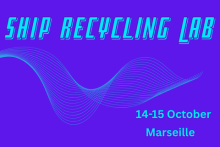
Current methods of dealing with end of life ships are, to say the least, sub optimal. They cause injury and death to underpaid workers and harm the environment.
The NGO Shipbreaking Platform is working to change this. During this event, participants will showcase and exchange ideas for good practices and strategies for ship demolition, design, waste management and material recovery.
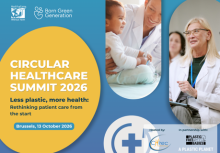
Healthcare is primarily intended to protect people's health, but it also has an impact on environmental and public health through its own operations and supply chains.
This conference will explore how hospitals can break this pattern by removing hazardous plastics, improving environmental performance and going circular.
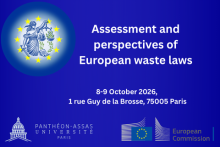
This international colloquium will mark the fiftieth anniversary of the first European Waste Framework Directive, Directive 75/442/EEC of 15 July 1975. It will bring together researchers, practitioners, jurists and decision-makers to take stock of this policy and reflect on its future.
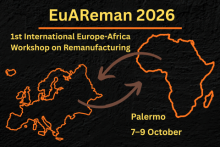
EuAReman 2026 is a Europe-Africa platform dedicated to remanufacturing, circular economy, industrial sustainability, advanced technologies, capacity building and new business models.
It aims to bring together researchers, companies, policy-oriented stakeholders, innovation actors and practitioners from Europe and Africa, with a view to strengthening dialogue and collaboration around remanufacturing as a pillar of the circular economy.
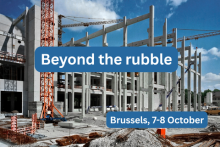
This conference aims to discuss future scenarios for sustainable management of construction and demolition waste. It will showcase the achievements of the INERTWASTE project and present inspiring circular solutions.
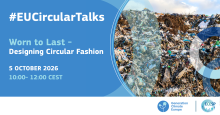
This #EUCircularTalk will present the key findings of Generation Climate Europe's report on textile waste in the European Union.
The session will explore the challenges involved, look at policy developments and shine a spotlight on practical examples from across the textile value chain.
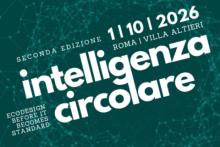
This conference will focus on the European policies, technologies and business models that are reshaping circularity, from the Circular Economy Act and textile legislation to the Digital Product Passport and artificial intelligence.