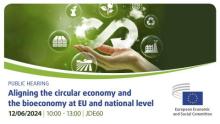
The European Economic and Social Committee will hold a public hearing in connection with its ongoing opinion on Aligning the circular economy and the bioeconomy at EU and national level. This opinion aims to enhance the synergies between bioeconomy, circularity and sustainability by promoting a more integrated and systemic approach to the circular bioeconomy.
The event will be webstreamed and interpreted into English, French and German. Participants will be able to interact.
SUSTAINair is a project funded by the EU Horizon 2020 programme. It aims to revolutionise aviation through groundbreaking technologies and impactful solutions.
Circular Aviation in the EU, SUSTAINair’s final conference, will bring together researchers, industry leaders and stakeholders to discuss the future of aviation sustainability. This flagship event will take place in Vienna on 11-12 June.
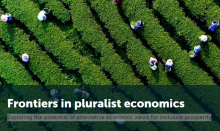
During this event in Rotterdam on 10 June, guest speakers Brian Fath, Michael Roos, Katy Gillespie and Şerban Scrieciu will introduce the audience to alternative economic theories, and how these can play a pivotal role in addressing the complex challenges of the Anthropocene era.
This free event is organised by the Erasmus University Rotterdam initiative Dynamics of Inclusive Prosperity, in collaboration with the Interdisciplinary Climate Economics for Nature and Society - ICENS lab.
The Polyolefin Circular Economy Platform (PCEP) 2024 Annual Conference on Bridging the Gap: Collaborating for Circular Polyolefins will take place on 6 June at The Hotel Brussels. It will explore the pressing issues which must be addressed if Europe is to switch to a circular economy and have a net zero future. Learn about the EU's plans to advance this agenda, what support is needed for industry to get there, and how collaboration will be key to success.
The conference will be preceded by a gala dinner on 5 June.
Chemical Recycling 2024 explores the ongoing developments, as well as highlighting challenges and opportunities for the industry. Bringing together experts from across the plastics supply chain, this event is an essential meeting place for anyone wishing to learn more, connect with industry leaders and discuss the latest updates in this fast-moving sector.
Let's Reduce Consumer Food Waste! Solutions from the European Consumer Food Waste Forum will take place on 5 June in Brussels.
This event is organised by the European Commission's Directorate-General for Health and Food Safety and the Joint Research Centre. It is intended for local, regional and national level policy makers, food businesses and other organisations and educational establishments committed to tackling consumer food waste.
This conference is an opportunity to meet the public authorities and companies involved in the circular economy in the French Drôme Ardèche region.
There will be a main session on a circular and cross-cutting approach for tomorrow's economy, a round table discussion on the regional donut in Valence Romans, five workshops and three site visits.
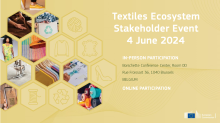
The Textiles ecosystem stakeholder event, organised by the European Commission’s Directorate-General for Internal Market, Industry, Entrepreneurship & SMEs, will take place on 4 June.
There will be updates from the Commission on the EU Strategy for Sustainable and Circular Textiles, the implementation of the Transition Pathway for the Textiles Ecosystem, the EU Pact for Skills and the European Partnership on Textiles under Horizon Europe.
EuRIC, a leading voice in Europe's recycling industries, is organising an event on "Plug into sustainability: e-waste recycling", to take place on 3 June from 14:00 to 17:30 CEST, in Brussels.
It will be an opportunity to explore the latest developments and sustainable practices in e-waste recycling, bringing together industry leaders, policy makers and innovators.
Stakeholder engagement is crucial for organisations to understand, address and balance the interests and expectations of various stakeholders.
In this webinar, HOOP experts will present strategies to help cities and regions engage stakeholders in the urban bioeconomy, and tools to bring people into the decision-making process.