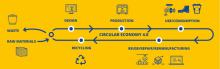
A Circular4.0 community is being built in the Alpine region. In the heart of the Julian Alps, on the shores of the Lake Bled in Slovenia, a full-day Circular4.0 final conference will be organised on 29 September 2022 - in parallel to the global World Future Verse conference - to discuss digital technologies as enablers to foster the transition of SMEs to the circular economy in the Alpine Space Area.
The Circusol workshop on 29 September 2022 seeks to bring together policy makers, industry representatives, experts and other stakeholders to discuss pathways forward towards a circular and resource-efficient solar power sector in Europe.
In a one-hour webinar on 27 September, EUFIC’s Research Lead, Dr Betty Chang, will present good practices for information-based campaigns to reduce food waste.
In March 2022, the European Commission released its EU strategy for sustainable and circular textiles in the Circular Economy Action Plan framework. The strategy aims at setting a framework to boost the competitiveness, sustainability and resilience of the EU textile sector.
Six months after its release, where do we stand? Join the ECESP leadership group on Textile and all speakers during this #EUCircularTalks event on 26 September, from 14:30 - 16:00 CEST, to discuss the EU textile strategy, its implementation and vision for the current textile industry.
To be updated on the latest innovations in the field of circular economy, follow LOOPS live webinar series committed to giving voice to the Horizon 2020 projects offering avant-guard solutions to tackle climate change and foster sustainable development.
In every episode, one aspect of the circular economy is picked up and discussed with the valuable contribution of experts. In this episode on 26 September 2022, participants will plunge into the world of textiles and explore smart, circular and sustainable solutions.
The EPA’s national Circular Economy Conference will be held at the Aviva Stadium on 22 September (from 9:30 to 17:00 Dublin time). The event will also be live-streamed via a web-based app.
The NONTOX EU Project is holding a webinar titled "NONTOX – Improving circularity of hazardous plastics" on 19 September 2022 at 13:00 - 14:30 EEST (12:00 - 13:30 CEST).
Experts from plastic value chain will discuss the current challenges in plastics recycling, as a results of the NONTOX project activities. Moreover, ecodesign guidelines and recommendations for several actors in the value chain will be proposed, along with opportunities and examples of best practices.
The seminar will be held in the framework of the annual exhibition Designs for a Cooler Planet organised by the Aalto University in Finland.
Join this webinar on 19 September and find out how Danish, Belgian and Dutch companies are embracing digital and technological innovation to deliver on food waste prevention.
This event will be a chance to discuss good practices regarding the reduction of food waste, including how we can make the best use of innovative solutions and data in order to transform our food systems to ensure enhanced food security and sustainable business opportunities.
There has been relatively little focus on the role of consumers in the circular economy but ultimately, the decision on how a product will be recycled, repaired or reused lies with the end users. This EU Circular Talk will share insights into enabling circular behaviour through digitalisation, learn about experiences across the EU, and discuss implications for the future with European stakeholders.