Coordination Group 2017-2020
-
Coordination Group activity type
Abstract
Within the ECESP, Circular Change has promoted the role of creative industries with a focus on circular design.
-
Coordination Group activity type
Abstract
This research by Lukas Stumpf, part of the CEC4Europe factbook on the circular economy published in September 2018, evaluates 131 projects from the Circular Economy Industry Platform (CEIP) regarding their contribution to circular economy from both a scientific and a political perspective.
-
Coordination Group activity type
Abstract
History of IRCEM - the Romanian Institute for Research in Circular Economy and Environment “Ernest Lupan” - and development of ROCES - Romania's Strategy for the Transition to a Circular Economy (ROCES) 2020-2030
-
Coordination Group activity type
Abstract
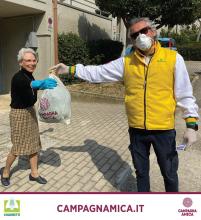
Copa-Cogeca is sharing the initiatives of its members that demonstrate the many actions taken by EU farmers and cooperatives to deal with the Covid-19 crisis.
-
Coordination Group activity type
Abstract
This publication by WBCSD and Circle Economy highlights how the built environment, consuming almost half of the world's resources extracted every year and responsible for a massive environmental footprint, is a fundamental sector in the circular transition.
-
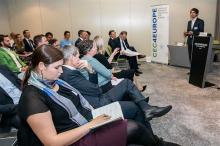
To mark its 4th anniversary, in October 2019 the Circular Economy Coalition for Europe invited representatives of the scientific community, research and development as well as ministries and policy to a symposium in Vienna on the theme of Science and Research for Circular Economy.
-
Coordination Group activity type
Abstract
ProCirc – Circular Procurement: Accelerate circular economy through procurement power, alliance and capacity building – is a 3.5 year Interreg North Sea Region project that started in 2018, co-funded by the Regional Development Fund of the European Union. It is led by a consortium of 11 partners, including ACR+, representing both public authorities and research institutes.
-
Coordination Group activity type
Abstract
On the initiative of the ECESP coordination group members Arthur ten Wolde (Ecopreneur.eu), Jean-Pierre Schweitzer (European Environment Bureau) and chair Ladeja Godina Košir (Circular Change), an ECESP breakfast meeting was organised on 29 January 2020 to introduce the Platform to MEPs working on the circular economy: achieving a circular economy through active stakeholder involvement.
-
Coordination Group activity type
Abstract
In June 2019, Altstoff Recycling Austria (ARA) and Circle Economy released the Circularity Gap Report Austria, the first measure of circularity for a nation state.
-
Coordination Group activity type
Abstract
On 1 September 2020, the 5th Circular Change Conference, held under the theme of “Mainstreaming the Circular Economy Mindset”, will set the trends for the discussion on sustainable leadership, business-led innovation and the EU’s sustainability goals based around the European Green Deal.