Electronics Goes Green 2024 is a conference geared to the growing global community of scientists, product developers, business managers and policymakers working on environmentally benign processes, products, systems and business models in and for the electronics and ICT industry.
Platform business models, exemplified by companies like Amazon, have disrupted industries and achieved global scale. This session on 17 April will discuss how these models, typically serving linear economies, can also promote circular and collaborative business models.
Participants will be able to explore how circular platforms, influenced by policies, technologies and trends, can drive the circular economy’s growth.
Circular Computing’s Sustainable IT Summit will take place on 23 April in the United Arab Emirates. It aims to welcome the leaders of some of the largest companies in IT and will combine theory and practice to identify tangible and workable solutions including circular processes such as remanufacturing.
SUSTAINair is a project funded by the EU Horizon 2020 programme. It aims to revolutionise aviation through groundbreaking technologies and impactful solutions.
Circular Aviation in the EU, SUSTAINair’s final conference, will bring together researchers, industry leaders and stakeholders to discuss the future of aviation sustainability. This flagship event will take place in Vienna on 11-12 June.
Climate Action Week for Fashion & Apparel will take place on 18 to 22 March, organised by the Scandinavian Textile Initiative for Climate Action (STICA).
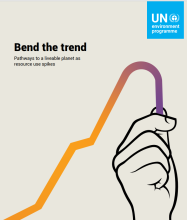
The 2024 edition of the Global Resources Outlook, from the International Resource Panel, shows that it is both possible and profitable to decouple economic growth from environmental impacts and resource use. It sheds light on how resources are essential to the effective implementation of the Agenda 2030 and multilateral environmental agreements to tackle the triple planetary crisis.
It is to be noted that the circular models to be followed are not just about recycling, but about keeping materials in use for as long as possible, and rethinking how goods as well as services are designed and delivered, thereby creating new business models.
The report also describes the potential to turn negative trends around and put humanity on a trajectory towards sustainability.
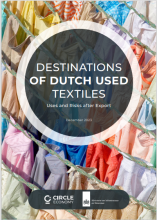
Used clothing exports from the Netherlands totalled more than €193 million in 2022: not an insignificant amount.
Understanding the realities of second-hand clothing markets in export destinations will be crucial to develop appropriate policy at national and supranational levels. The aim is to support the socially equitable and environmentally sustainable processing of used textiles, and ensure that this industry is in line with the EU's 2020 Circular Economy Action Plan and the European Green Deal.
To this end, the report explores what happens to textiles collected in the Netherlands in their various destination countries, and highlights the impacts and risks associated with these exports, as well as how they are addressed.
Enterprise Europe Network Flanders, Flanders, Wallonie Entreprendre and Hub.Brussels are organising an official WCEF2024 side-event: a global online matchmaking session focusing on circular innovation. There'll be an online part (8-14 April) and an in-person part (17 April).
AgriLoop is a groundbreaking project funded by Europe and China which is identifying innovative solutions for converting agricultural and food residues into high-value, environmentally-friendly products. It's holding a webinar on Developing high-value products from agricultural residues, to take place on 6 March at 10:30-13:30 CET.
Since 2019, Circle Economy Foundation's Circularity Gap Reports have been providing analysis and theory on the global state of circularity. According to the Circularity Gap Report 2024, the circular economy is becoming more popular but failing to deliver.
The 2024 report lays out a roadmap for ambitious change to unlock capital, roll out bold policies and close the skills gap.
The circular economy is now extremely well known: the volume of discussions, debates and articles on it has almost tripled over the past five years. Unfortunately, the rate of global circularity is falling. The share of secondary materials consumed by the global economy actually decreased from 9.1% in 2018 to 7.2% in 2023 - a 21% drop in five years.
Please note: personal data must be given to download the report.