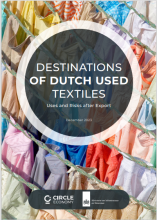
Used clothing exports from the Netherlands totalled more than €193 million in 2022: not an insignificant amount.
Understanding the realities of second-hand clothing markets in export destinations will be crucial to develop appropriate policy at national and supranational levels. The aim is to support the socially equitable and environmentally sustainable processing of used textiles, and ensure that this industry is in line with the EU's 2020 Circular Economy Action Plan and the European Green Deal.
To this end, the report explores what happens to textiles collected in the Netherlands in their various destination countries, and highlights the impacts and risks associated with these exports, as well as how they are addressed.
Enterprise Europe Network Flanders, Flanders, Wallonie Entreprendre and Hub.Brussels are organising an official WCEF2024 side-event: a global online matchmaking session focusing on circular innovation. There'll be an online part (8-14 April) and an in-person part (17 April).
AgriLoop is a groundbreaking project funded by Europe and China which is identifying innovative solutions for converting agricultural and food residues into high-value, environmentally-friendly products. It's holding a webinar on Developing high-value products from agricultural residues, to take place on 6 March at 10:30-13:30 CET.
Since 2019, Circle Economy Foundation's Circularity Gap Reports have been providing analysis and theory on the global state of circularity. According to the Circularity Gap Report 2024, the circular economy is becoming more popular but failing to deliver.
The 2024 report lays out a roadmap for ambitious change to unlock capital, roll out bold policies and close the skills gap.
The circular economy is now extremely well known: the volume of discussions, debates and articles on it has almost tripled over the past five years. Unfortunately, the rate of global circularity is falling. The share of secondary materials consumed by the global economy actually decreased from 9.1% in 2018 to 7.2% in 2023 - a 21% drop in five years.
Please note: personal data must be given to download the report.
The uptake of green and digital technologies will massively increase demand for critical raw materials (CRMs). Since CRM supply chains are heavily concentrated, this exposes the EU to significant CRM supply risks. Several policy options emerge for the EU to address these risks. Domestically, there is potential to produce primary and secondary CRMs, yet significant time and resources will be required to scale up production.
Material substitution and resource efficiency might also play non-negligible roles with enough R&I support. Internationally, both trade policy and international cooperation (including within multilateral fora) hold significant prospects for mitigating supply risks. If properly managed, stockpiling CRMs can also help shield against short-term supply or price shock.
This COP28 side event has been organised by the EESC, the European Commission and the Coordination Group members of ECESP. It took place on 10 December in Dubai, focusing on Accelerating the financing of the circular economy in climate and biodiversity strategies.
The 8th World Circular Economy Forum hits Brussels from 15 to 18 April 2024 to turn circular visions into actions. The world’s leading event for circular economy thinkers, doers and leaders will showcase the most impactful circular solutions from Europe and around the world. Online participation is open to everyone.
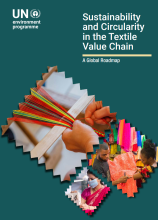
This UNEP report outlines what each stakeholder group can do individually and collectively to reach the shared destination of a circular textile sector.
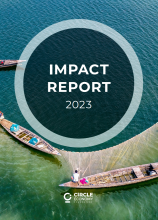
The Foundation aims to accelerate the transition to the circular economy, drawing on an international team of experts based in Amsterdam who flag up practical and scalable solutions to put the circular economy into action. The ultimate goal is to see global circularity double by 2032.
The Impact Report focuses on the Circularity Gap Reporting Initiative, thanks to which Circle Economy Foundation - over the years - has tracked global circularity and highlighted replicable case studies in its Circularity Gap Reports covering countries from Austria to Latin America and the Caribbean. The Initiative continues to bring together global, multi-sector stakeholders from academia, business, government and the
The Dutch circular procurement platform Versnellingsnetwerk Circular Inkopenhas gone global with the English version of its website.
Aiming for a sustainable future, it shares Dutch good practices on circular procurement. Tailored to global stakeholders, the platform offers a step-by-step guide, role-specific advice and product-specific insights, emphasising supplier involvement.
Developed through multistakeholder collaboration and supported by the Ministry of Infrastructure and Water Management, it is a vital resource for a circular economy.