The call for nominations of the Meeting Pack 2022 Awards (deadline: 14 February) is targeted at national and international companies whose innovations in sustainable packaging solutions contribute to industry development. Barrier packaging is a challenge for the circular economy.
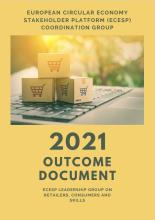
In 2021, the Leadership Group on Retailers, Consumers and Skills considered issues such as how to made the electronics sector more circular, how to boost public awareness of the need to become more circular and how to step up training with a view to reskilling and upskilling.
In 2021, the ECESP Textiles Leadership Group identified three key topics: the EU Policy Framework, Extended Producer Responsibility (EPR) and Circular Design for textiles. This document summarises the main takeaways from the three #EUCircularTalks online events and a year of work.
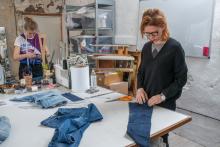
The mission of Reet Aus is to minimise the ecological footprint of one of the world's most contaminating businesses – the fashion industry. They do it by industrial upcycling. This not-wasteful way of production is based on a scientific methodology called UPMADE® that has been developed by the designer and founder PhD Reet Aus in cooperation with Stockholm Environment Institute Tallinn Center.
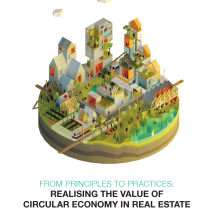
Arup has joined forces with the Ellen MacArthur Foundation to produce a report on the value of circular economyin real estate.
The circular economy offers real estate investors a framework for achieving environmental and social goals while delivering better economic performance. How do real estate business models need to change - apart from eco-design - if circular principles are to scale up in this sector?
The report defines five models to improve financial performance to the benefit of real estate investors and construction clients:
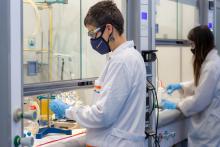
The EROS Project, with the participation of AIMPLAS and ITC, is working to develop new recycling processes to recover composite materials from the aeronautics and wind turbine sectors to manufacture new products for the transport and ceramics industries.