Circul'R and Loop have recently launched the reuse coalition for household, beauty and hygiene products in supermarkets. This webinar will present the coalition to interested brands.
AIMPLAS has developed a device which demonstrates how the Digital Product Passport for plastic products will work. This tool provides essential information about the traceability, materials, recycling and carbon footprint of products.
CircuLaw is an open-source knowledge platform that helps policymakers, project leaders and purchasers effectively utilise existing laws and regulations to accelerate the transition to a circular economy.
This report is the outcome of a collaborative endeavour by IFC, the Romanian Government, PIVOT-C and FEPRA GROUP.
A year of in-depth consultations and workshops (2023-2024) involving Romanian experts from the public and private sectors resulted in a guide setting out operational actions and recommendations for Romania's circular economy transition. The recommendations are intended for the Romanian government and central authorities and aim to facilitate the implementation of the National Circular Economy Strategy and the Circular Economy Action Plan launched in 2023.
The proposals cover regulatory frameworks, financial incentives, educational initiatives and infrastructure development.
Recycling Albania was set up in 2022, based on the zero waste hierarchy. It aims to transform Albania’s waste sector into a model for sustainable resource management and lead the way in circular economy solutions in the Western Balkans.
It's setting up a Circular Economy Park, with a Multifunctional Education Centre, Recycling Yard and Second-Hand Store. The environmental, economic and social dimensions of the circular economy are covered!
Re:inventex is carrying out a project for the recycling of post-industrial and pre-consumer textile waste. It is essentially the first pilot project in Ukraine to create a modern infrastructure for the collection, sorting and recycling of textile waste.
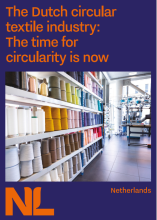
This publication featuring Holland Circular Hotspot shows the state of play and potential of circularity within the textile value chain in the Netherlands and beyond.
It aims to engage international dialogue on accelerating the transition to a fully circular textile economy, with policymakers, researchers, entrepreneurs, consumers and investors.
The challenges of achieving sustainability and circularity in textiles are complex and interconnected, from reducing environmental impact to improving labour conditions. This underscores the importance of international and multi-stakeholder collaboration to drive innovation, scale up sustainable practices and create a thriving circular textile industry.