In 2016, the Italian National Agency for New Technologies, Energy and Sustainable Economic Development (ENEA) set up a Symbiosis Users Network (SUN) to boost industrial symbiosis in Italy. The network promotes circular economy models through industrial symbiosis by focusing on operational issues.
SUN's 2019 conference was devoted to Good practices of industrial symbiosis in Italy and the contribution of regional policies as a strategic lever. The event, co-organised by SUN, Ecomondo and ENEA was held in Rimini (IT) on 7 November 2019 at Ecomondo - a leading event in Europe for new circular economy models.
Reports on ENEA-promoted conferences on industrial symbiosis are available here.
The European Policy Centre’s (EPC) Task Force called Digital Roadmap to Circular Economy has explored the linkages between digitalisation and circular economy, the opportunities created by data and digitally-enabled solutions, and the challenges associated with harnessing their full potential for the transition to a circular economy.
The project represents a pioneering endeavour in exploring the interconnections between the digital and green transformations and considers the implications for EU policymaking.
The final publication The circular economy: Going digital and its executive summary show that digitalisation can offer enormous possibilities for the transition to a more sustainable, circular economy but it is essential to steer it in the right direction.
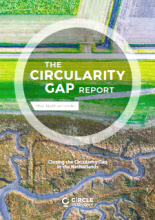
The Dutch economy is 24.5% circular. Measures in four key sectors can triple the national circularity rate and help the government achieve its ambitions for a fully circular economy by 2050.
On 3 June, Circle Economy launched the Circularity Gap Report for the Netherlands. The report shows that the Netherlands is a circular frontrunner: the country's circularity rate is three times higher than the global rate of 8.6%. Consuming 221 million tonnes of materials each year, the Netherlands retrieves one quarter from non-virgin, secondary sources. However, if the government is to achieve its ambitions of full circularity by 2050, a major overhaul of the national economy, including jobs, will still be necessary.
Holland Circular Hotspot is a private-public platform in which companies, knowledge institutes and local authorities collaborate to promote and support international collaboration and knowledge exchange on Dutch circular economy, and the Netherlands Enterprise Agency, a government agency for sustainable, agricultural, innovative and international business development and growth, have come together to share insights, networks and resources to help kickstart circular developments that will boost the Sustainable Development Goals (SDGs).
Circular examples from various market segments closely linked to SDGs such as agri-food, manufacturing and the built environment are included in the brochure next to cross-sectoral topics such as consumer goods or plastics.
This research note produced by Ecopreneur.eu is a 1st inventory of the potential impacts of future EU circular fashion on non-European textile producing countries. It uses existing literature and input from four circular economy experts to analyse the economic, social and environmental impacts.
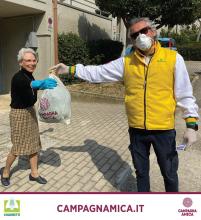
Copa-Cogeca is sharing the initiatives of its members that demonstrate the many actions taken by EU farmers and cooperatives to deal with the Covid-19 crisis.