Cities and entrepreneurs are expected to be full of inspiring and sustainable ideas but they often have a lot of questions before they can implement those ideas. How do you set up a product-as-a-service business model? How do I protect my logo? How can you support cititzens' initiatives? How can the financiers be involved...
To get an answer to all these and other questions, you can ask experts at CircleAid, a network of experts and mentors to help you kick-start your circular initiative. They have specific experience of the circular economy: business models, procurement, governance, financing...
These experts are mentors who can guide you through your circular questions. Consultants who want to become part of this database can apply if they have experience or knowledge of the circular econo
This analysis by IEEP and SEI assesses to what extent the actions included in the new Circular Economy Action Plan published by the European Commission on 11 March 2020 may contribute to a more circular European economy within the boundaries of the planet.
The authors conclude that the action plan is a promising continuation of existing efforts, but ask for more concrete measures to address unsustainable resource consumption.
The authors make five recommendations to EU policymakers in this regard and emphasise the importance of EU Member States and the private sector showing leadership and willingness to innovate.
The campaign “Be a Miljönär” [a pun which merges miljö (environment) with miljonär (millionaire)] has a long-term goal: reducing waste and making sustainable consumption a habit among people aged between 18 and 30.
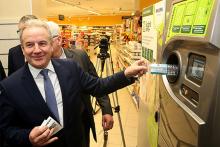
In February 2016, the government of Lithuania implemented a “deposit return system”, to give consumers an incentive to return used beverage containers for recycling. To combat litter and increase collection and recycling rates, consumers would pay a deposit amount of €0.10 when purchasing eligible drink containers, to be refunded when the empty container is returned for recycling.
Customers from the MUD brand can lease or buy their jeans, benefit from a free repair service, and return the worn out items to have them recycled into new denim products - so that the iconic piece of clothing remains in use for the longuest time. This brand philosophy saves 78% water and 61% CO2-eq per jeans compared to industry standards.
IEEFC was established in 2014 and aims to promote a community of stakeholders (including public authorities and businesses) committed to the environmental, economic and social transition.
Its focus is the functional economy: encouraging people to buy the use of an item rather than the item itself. This approach limits the amount of resources needed to meet people's needs.
The Institute fosters cooperation between public and private stakeholders. It is active in knowledge sharing and awareness raising, organising workshops and visual aids. It encourages networking and acts as a discussion forum, with a network of clubs in France and two in Brazil.
It also has a library of publications on the functional economy.
The Swedish Life Cycle Center is an initiative by the Swedish Energy Agency, hosted by Chalmers University of Technology, which strengthens collaboration and encourages more organisations to apply a life cyle perspective in Sweden.
It focuses on life cycle thinking about products. This means considering not just what happens during its production or use, but also how the raw materials were made and what happens after the user no longer wants it.
Circular Economy Club is the networking arm of the Circular Economy Institute. It wants to put the circular economy on the map, locally and globally.
It has over 10 000 members and 280 clubs in 140 countries around the world. People can sign up for free, join their local club and discuss circular issues. Clubs meet in person and online, with a view to making the circular economy a reality.
CEC aims to see all cities operating on a circular model, eliminating waste.
Circul'R is a team that has the expertise to help companies and regions shift to a circular economy.
It aims to unlock the circular economy's potential by connecting innovative startups with companies so that they can co-create solutions to accelerate their transition towards the circular economy.
Focus areas:
training on identifying the challenges and opportunities of the circular economy,
consultancy (helping companies go circular,
Circul'R Club (more than 100 companies and institutions, from large groups to local authorities, including ESG funds and committed startups. Each participant contributes to the transition towards a circular economy model),
Circul'R coalitions (aiming to bring together companies from different sectors to address specific issues and deploy circular projects).
The ECO.NOMIA portal was set up in 2016 as the Portuguese Circular Economy Information Portal. It was one of the components of the 2017 Portuguese Action Plan for Circular Economy, playing the role of a knowledge-sharing space.
It is a one-stop-shop for all things circular, in Portuguese, and intended for individuals, companies and investors. Not only does it explain the principles, advantages and opportunities of the circular economy, it also provides examples and information on financing, learning opportunities and national and international events.