The Swedish Life Cycle Center is an initiative by the Swedish Energy Agency, hosted by Chalmers University of Technology, which strengthens collaboration and encourages more organisations to apply a life cyle perspective in Sweden.
It focuses on life cycle thinking about products. This means considering not just what happens during its production or use, but also how the raw materials were made and what happens after the user no longer wants it.
The Circular Economy Academy is a free mentoring and support programme, set up by the Rediscovery Centre, which is the National Centre for the Circular Economy in Ireland. The programme assists social enterprises and community organisations in Ireland to move their activities towards sustainability and embrace the circular economy.
The aim of the Circular Economy Academy is to facilitate Ireland’s transition to the circular economy through demonstration, education and collaboration. The support provided is based on the Rediscovery Centre’s vast knowledge of social enterprise development and design thinking concepts, from advice for start ups to business planning, funding, diversification, training and more.
Each service is tailor-made to suit the needs of the participating organisation.
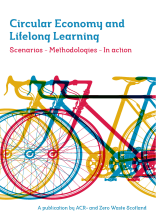
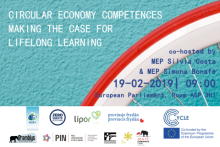
Following a 19 February 2019 workshop on Circular Economy Competences - Making the Case for Lifelong Learningin the European Parliament, ACR+ and Zero Waste Scotland have produced a report detailing how to introduce circular thinking in education, create vocational training programmes in waste management, repair and reuse, and developing training programs for local authority staff.
This report builds on a workshop these organisations hosted in the European Parliament in 2019. It brings together the experiences participants shared and is meant to help educators, policymakers and managers of NGOs involved in training and educational organisations promote the development of local circular economy loops.
The three chapters of this booklet cover different areas of the lifelong learning landscape:
Circular thinking in education
Upskilling waste, repair & reuse industry
Facilitating the transition towards a circular economy.
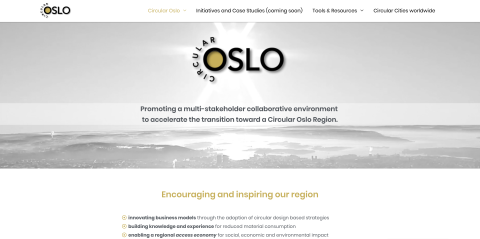
Circular Oslo promotes multi-stakeholder collaboration to accelerate the circular transition in the Oslo Region.
It does so by sharing knowledge and expertise for reduced material consumption, while supporting regional activities with a positive social, economic and environmental impact.
Circular Oslo:
inspires by identifying and highlighting municipalities, organisations, projects and initiatives that implement circular solutions and innovative business models
develops and provides access to tools, workshops and educational resources for public entities, communities, NGOs, businesses, entrepreneurs and students to better understand and implement circular solutions
collaborates with similar initiatives whose values and mission align
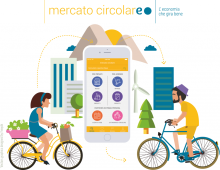
An app which enables users to buy circular goods and services near them or online and provides reliable information on what exactly the circular economy means.
Cirkelstad is a national platform connecting private entrepreneurs and policy-makers who are delivering the transition to a circular economy in pioneering Dutch cities.
In addition to a comprehensive database of good practices, research and policy guidelines to inspire practitioners, the Cirkelstad Academie also provides occasional training sessions and advisory services to aspiring circular projects in Utrecht and Amsterdam.
Funghi Espresso is an innovative business that produces fresh mushrooms in a sustainable and natural way, using coffee grounds from local bars and restaurants as a growing medium.
On 19 February 2019 the European Parliament and ACR+ hosted experts and practitioners from local and regional authorities, training providers, NGOs and academia across Europe.